
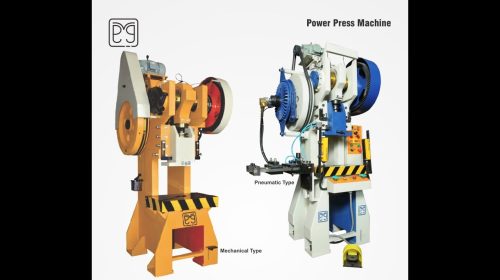
Power press machines are essential tools in modern manufacturing, providing precision, efficiency, and consistency in metal forming, cutting, and shaping operations. Industries such as automotive, electronics, appliances, and construction rely on these machines for high-volume production and tight-tolerance requirements. The quality and performance of a power press machine are determined not only by its design but also by the materials and engineering techniques used in its production. Understanding these factors is critical for manufacturers and industrial operators seeking reliable and long-lasting equipment.
The production of a power press machine begins with careful material selection. Components such as the frame, ram, gears, and hydraulic systems must withstand high operational forces, repeated cycles, and environmental factors such as temperature fluctuations and corrosion. Selecting the right materials ensures structural integrity, durability, and consistent performance under heavy-duty use. High-strength steels, alloys, and specialized metals are commonly used to achieve these objectives.
A Power Press Machine Manufacturer focuses on combining quality materials with advanced engineering practices to produce machines that meet industrial standards. These manufacturers employ precision machining, heat treatment, surface finishing, and assembly techniques to optimize performance. By integrating engineering expertise with high-quality materials, manufacturers deliver presses capable of handling diverse operations such as punching, stamping, blanking, bending, and forming with accuracy and efficiency.
Table of Contents
ToggleStructural Materials for Frames and Supports
The frame of a power press is the most critical structural component, as it must withstand the forces generated during operation without flexing or deforming. Most manufacturers use high-strength cast iron or welded steel frames for their superior rigidity and vibration-damping properties. Cast iron is preferred for its excellent compressive strength and ability to absorb shock loads, while welded steel frames provide flexibility in design and ease of customization. Proper engineering of the frame ensures stability, precision, and long service life of the machine.
Ram, Slide, and Moving Components
The ram or slide is another critical component of a power press, as it delivers the force necessary to shape or cut the workpiece. Ramming components are typically made from high-strength steel alloys that are hardened and heat-treated to resist wear and deformation. Precision machining ensures that the ram moves accurately along its guideways, maintaining consistent contact with the die and producing precise results. Bearings, bushings, and guides used in moving parts are engineered to reduce friction and extend component lifespan.
Gears, Flywheels, and Transmission Systems
Mechanical power presses rely on gears, flywheels, and transmission systems to convert rotational energy into linear motion. These components must be manufactured using high-quality alloy steels that are heat-treated for hardness and wear resistance. Gear teeth are precision-cut to minimize backlash and ensure smooth operation. Flywheels are dynamically balanced to reduce vibration and maintain consistent force output. Proper engineering of transmission systems ensures energy efficiency and reliable performance, even under continuous heavy-duty operation.
Hydraulic and Pneumatic Systems
Hydraulic and pneumatic power presses require specialized materials and engineering for fluid and air systems. Hydraulic cylinders are typically made from high-strength steel or alloy with polished surfaces to prevent leaks and maintain pressure integrity. Seals, valves, and pumps are carefully selected to handle high pressures and provide smooth, controlled motion. Pneumatic systems use corrosion-resistant metals and robust air-handling components to ensure reliable performance and precise force application. Engineering these systems for durability and efficiency is critical to machine performance.
Electrical and Control Systems
Modern power press machines incorporate electrical and electronic control systems for automation and safety. Components such as sensors, switches, servo motors, and programmable logic controllers (PLCs) must meet rigorous quality and engineering standards. Wiring, insulation, and protective housings are designed to withstand industrial environments, including exposure to dust, vibration, and temperature variations. Engineering integration of control systems ensures accurate stroke control, variable speed operation, and enhanced safety for operators.
Surface Treatments and Corrosion Protection
To extend machine life and maintain consistent performance, surface treatments and corrosion protection are applied to critical components. Techniques such as hardening, plating, anodizing, and painting improve wear resistance and prevent rust or surface degradation. Proper surface engineering ensures that components such as slides, rams, and die supports remain durable even under continuous heavy-duty use, reducing maintenance requirements and operational downtime.
Quality Assurance and Engineering Standards
Power press manufacturers implement strict quality assurance protocols throughout the production process. Components are inspected for dimensional accuracy, material composition, hardness, and surface finish. Engineering standards such as ISO certifications guide design, manufacturing, and testing procedures. This combination of material selection, precision engineering, and quality control ensures that machines operate reliably, safely, and efficiently in demanding industrial applications.
Conclusion
The materials and engineering used in power press machine production are fundamental to their performance, reliability, and longevity. High-strength steels, specialized alloys, precision-machined components, and carefully engineered hydraulic, mechanical, and electrical systems work together to create machines capable of performing complex metalworking operations with accuracy and efficiency. By combining advanced materials with expert engineering practices, power press machine manufacturers provide equipment that meets the demanding needs of modern manufacturing, ensuring high productivity, reduced downtime, and long-term operational success.