
Efficient air distribution is at the core of every well-designed HVAC system. Without proper airflow management, even the most advanced heating and cooling equipment cannot deliver consistent indoor comfort. This is where grilles and diffusers play a critical role, ensuring air is properly supplied, returned, and balanced throughout a space.
Understanding hvac grilles and diffusers is essential for achieving optimal indoor comfort, energy efficiency, and long-term HVAC system performance in residential, commercial, and industrial environments.
Table of Contents
ToggleThe Role of HVAC Grilles and Diffusers in Air Distribution
Grilles and diffusers are terminal devices that control how air enters and exits a room. Although they are often mentioned together, they serve different but complementary functions.
- Grilles manage air return or exhaust, allowing air to flow back into the HVAC system.
- Diffusers distribute conditioned air evenly into a space for consistent temperature and comfort.
Together, they ensure balanced airflow and prevent issues such as stagnant air or uneven cooling and heating.
How HVAC Diffusers Improve Comfort
Diffusers are specifically designed to enhance occupant comfort by controlling how air is introduced into a room.
Key Comfort Benefits
- Even temperature distribution across spaces
- Reduced drafts and air discomfort
- Better mixing of conditioned air
- Improved indoor air quality
By regulating airflow patterns, diffusers help maintain a stable and comfortable indoor environment.
How HVAC Grilles Support System Efficiency
While diffusers focus on supply air, grilles are essential for maintaining proper air circulation within the system.
Key Functions of Grilles
- Enable efficient return air flow
- Support pressure balance in rooms
- Protect duct openings from dust and debris
- Assist in maintaining system airflow stability
Without properly designed grilles, HVAC systems may experience reduced efficiency and uneven pressure distribution.
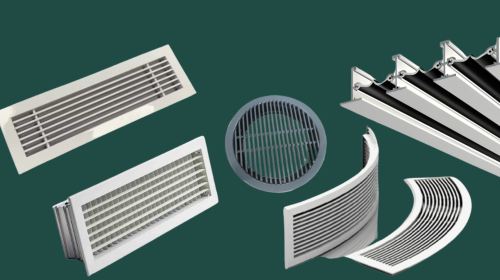
Types of HVAC Grilles and Diffusers
Different designs are used depending on airflow requirements, building layout, and aesthetic needs.
Common Types of Grilles
- Fixed blade grilles
- Adjustable blade grilles
- Return air grilles
- Door transfer grilles
Common Types of Diffusers
- Ceiling diffusers
- Linear slot diffusers
- Swirl diffusers
- Jet diffusers
- Floor diffusers
Each type is designed to serve specific airflow patterns and installation environments.
Materials Used in HVAC Grilles and Diffusers
Material selection plays a major role in performance, durability, and appearance.
Common Materials
- Aluminum: Lightweight, corrosion-resistant, and widely used in commercial systems
- Steel: Strong and durable, suitable for industrial applications
- Plastic: Cost-effective option for residential or light-duty use
High-quality materials ensure long service life and stable airflow performance.
Enhancing Energy Efficiency Through Proper Air Distribution
Properly designed grilles and diffusers contribute significantly to HVAC energy efficiency. When air is distributed evenly, the system does not need to work harder to maintain temperature balance.
Energy Efficiency Benefits
- Reduced HVAC energy consumption
- Lower operational costs
- Improved system performance
- Reduced wear on equipment
Efficient airflow distribution helps maintain optimal system operation over time.
Importance of Proper Placement and Design
The effectiveness of HVAC grilles and diffusers depends heavily on correct placement and design selection.
Key Considerations
- Room size and layout
- Ceiling height and airflow direction
- Occupant comfort requirements
- HVAC system capacity
Improper placement can lead to uneven airflow, noise issues, and reduced system efficiency.
Applications in Different Environments
HVAC grilles and diffusers are used across a wide range of building types, each with unique requirements.
Residential Buildings
Provide quiet and comfortable airflow in living spaces while maintaining energy efficiency.
Commercial Buildings
Ensure uniform air distribution in offices, retail stores, and public areas.
Industrial Facilities
Support high-capacity airflow systems and durable performance under demanding conditions.
Healthcare and Hospitality
Maintain strict airflow control for comfort, hygiene, and temperature stability.
Maintenance and Long-Term Performance
Regular maintenance helps ensure that grilles and diffusers continue to operate efficiently.
Maintenance Practices
- Periodic cleaning to remove dust buildup
- Inspection for damage or blockages
- Ensuring proper airflow balance
- Checking for secure installation
Proper maintenance extends system lifespan and maintains consistent performance.
Conclusion
HVAC grilles and diffusers are essential components that directly influence indoor comfort, air quality, and system efficiency. By ensuring proper airflow distribution and return air balance, they help create stable and comfortable indoor environments across a wide range of applications.
By understanding hvac grilles and diffusers, engineers, contractors, and building owners can design more efficient HVAC systems that deliver consistent comfort, improved energy savings, and reliable long-term performance.