Warehouses are increasingly expected to process larger order volumes while maintaining accurate inventory records and predictable delivery schedules. In facilities that handle palletized goods, moving loads between receiving, storage, picking, wrapping, and dispatch areas is a major part of daily operations. Forklifts and manual pallet handling remain useful in many settings, but repeated transfers can create traffic, require labor, and make it harder to coordinate automated processes. Conveyor-based pallet movement offers another way to connect warehouse activities.
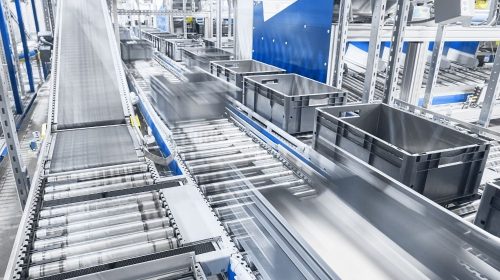
A Pallet Transfer Conveyor moves loaded pallets between designated workstations or storage and handling areas. Depending on the system, it may use powered rollers, chains, belts, lift-and-transfer mechanisms, or integrated turntables. These components can be coordinated with warehouse control software and other automation equipment to move pallets along defined routes while supporting accurate sequencing and material flow.
1. Establishes Predictable Pallet Routes
A conveyor system creates fixed paths between key warehouse locations. Pallets can travel from goods-in areas toward inspection, storage, picking, or dispatch without requiring a forklift for every movement.
This can make warehouse traffic easier to organize, particularly where pallet transfers occur frequently. Defined routes also help planners understand how loads move through the facility and identify potential bottlenecks.
The layout should reflect actual operational sequences. If pallets need to visit several workstations, the conveyor network should support those movements without unnecessary detours or excessive transfer points.
2. Connects Automated Storage and Retrieval Systems
Automated storage and retrieval systems often depend on conveyors to move pallets between storage equipment and other warehouse processes.
A pallet may arrive at an infeed station, pass through identification or measurement equipment, and then move toward a storage crane or shuttle system. When retrieved, it may return through conveyors to an order-picking or dispatch area.
For reliable operation, pallet dimensions, load stability, and weight must fall within the system’s specified limits. Irregular or unstable loads may require correction before entering automated equipment.
3. Reduces Repetitive Forklift Movements
Forklifts are valuable for flexible material movement, but using them for every short transfer can increase traffic within busy warehouses.
Conveyor systems can take over some repetitive routes, allowing forklifts to focus on tasks that require flexible positioning, such as replenishment or handling unusual loads.
This may help reduce vehicle movement in selected areas, although conveyors do not eliminate the need for mobile equipment. Warehouse designers should evaluate traffic patterns and pedestrian access when deciding which routes should be automated.
4. Supports Consistent Load Handling
Pallets can vary in dimensions, construction, weight distribution, and condition. A transfer system must accommodate the pallet types used by the facility and the way goods are stacked.
Powered roller conveyors may be suitable for pallets with compatible bottom boards, while chain conveyors can provide support at specific contact points. Lift-and-transfer units may move pallets between intersecting conveyor lines.
The correct arrangement depends on pallet design, load center, underside clearance, and the condition of the load. Specifications should be checked before introducing new pallet types.
5. Improves Tracking and Process Coordination
Sensors and identification devices can be used to detect pallet positions and help coordinate movement between stations. Barcode or other identification systems may link physical loads with warehouse records.
Controls can prevent a pallet from entering a section that is occupied or unavailable. They can also manage accumulation areas so that upstream equipment does not continue feeding a blocked route.
Integration with warehouse management or control software should be planned carefully. Accurate identification, consistent data exchange, and clear fault handling are important for reliable automation.
6. Makes Better Use of Warehouse Space
A well-designed pallet conveyor network can reduce some of the space needed for repeated vehicle movement and temporary staging. Conveyors may be installed along planned floor routes or integrated with elevated structures where suitable.
However, automation requires space for equipment, guarding, access, maintenance, and emergency routes. The layout must not obstruct exits or create unsafe crossings with pedestrian paths.
A detailed facility survey helps determine whether conveyor installation will improve space utilization or introduce new constraints.
7. Consider Safety, Maintenance, and Flexibility
Powered rollers, chains, lifting devices, and transfer mechanisms introduce mechanical hazards. Guarding, emergency stops, safe access, and isolation procedures should be included in the design.
Maintenance teams need access to drives, bearings, sensors, motors, and transfer units. Routine inspections should also check conveyor alignment, pallet stops, accumulation zones, and safety devices.
If warehouse operations may change, consider modular sections and controls that can accommodate future extensions or revised routes.
Conclusion
Pallet transfer conveyor systems help automated warehouses move loads along predictable routes and connect storage, handling, and dispatch processes. Their value depends on pallet compatibility, system integration, layout, safety, and maintenance. When designed around actual warehouse workflows, they can support more coordinated material movement and reduce repetitive handling tasks.