

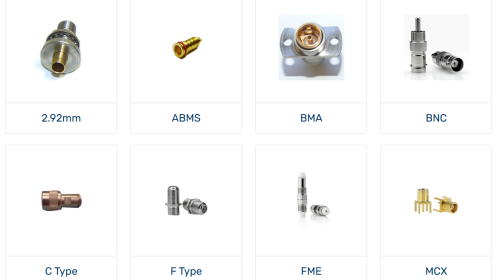
RF connectors are critical components in modern communication and electronic systems, providing a reliable path for high-frequency signals. The performance and durability of these connectors depend not only on the materials and design but also on the rigorous testing standards they meet during manufacturing. Ensuring that RF connectors comply with established standards is essential for minimizing signal loss, preventing failures, and guaranteeing consistent performance under various conditions. Understanding the testing standards followed by RF connector manufacturers helps engineers and procurement teams make informed decisions when selecting components.
Table of Contents
ToggleImportance of Testing in RF Connector Manufacturing
Testing is a fundamental part of RF connector manufacturing. Unlike standard electrical connectors, RF connectors operate at high frequencies and often in challenging environments. This makes them susceptible to signal degradation, impedance mismatches, and mechanical wear if not manufactured and tested to strict standards. Testing ensures that connectors can handle operational stresses such as temperature fluctuations, vibration, humidity, and mechanical fatigue while maintaining optimal electrical performance.
Reliable testing also verifies compliance with industry specifications and regulatory requirements. It provides confidence to engineers and system designers that the connectors will function correctly in critical applications, ranging from telecommunications and aerospace to military and medical systems. Working with a trusted RF Connector Manufacturer ensures that each component is tested according to rigorous standards and is capable of meeting specific performance requirements.
Common Electrical Testing Standards
Electrical testing is one of the most important aspects of RF connector quality assurance. These tests focus on verifying parameters such as impedance, insertion loss, return loss, voltage standing wave ratio (VSWR), and continuity. Impedance testing ensures that the connector maintains the correct characteristic impedance, typically 50 ohms or 75 ohms, to minimize signal reflections and losses. Return loss and VSWR tests measure the efficiency of signal transmission and identify any mismatches that could degrade performance.
Insertion loss testing evaluates the signal loss through the connector, ensuring that the signal integrity is maintained at high frequencies. Continuity and resistance measurements verify the quality of electrical contacts and the connector’s ability to handle the intended current without overheating or failure. Manufacturers often use automated testing equipment to achieve high precision and repeatability in these electrical assessments.
Mechanical and Environmental Testing Standards
RF connectors are also subject to mechanical and environmental testing to confirm their durability and reliability under various conditions. Mechanical tests include mating and unmating cycles, torque tests, and vibration testing. Mating and unmating tests assess the connector’s ability to withstand repeated connections without damage or performance degradation. Torque tests ensure that connectors can handle proper tightening and secure attachment without deformation or loosening over time. Vibration tests simulate real-world conditions, such as those encountered in aerospace or automotive applications, to verify that the connectors maintain electrical continuity under mechanical stress.
Environmental testing is equally crucial. These tests expose connectors to extreme temperatures, humidity, salt spray, and corrosive environments to ensure long-term reliability. High-temperature and thermal shock tests verify that connectors can operate in demanding conditions without losing performance. Corrosion resistance testing ensures that metal contacts and plating remain intact and functional over time, even in harsh outdoor or industrial environments.
Industry and Military Standards
RF connector manufacturers often adhere to internationally recognized standards to ensure consistency and quality. Common industry standards include those set by the International Electrotechnical Commission (IEC), the Institute of Electrical and Electronics Engineers (IEEE), and the Electronic Industries Alliance (EIA). These standards cover electrical performance, mechanical durability, and environmental resilience, providing a benchmark for manufacturers and users alike.
In military and aerospace applications, connectors must meet even more stringent standards, such as MIL-STD-348 for interface dimensions, MIL-STD-202 for environmental testing, and MIL-STD-810 for mechanical and environmental stresses. Compliance with these standards ensures that connectors can operate reliably under extreme conditions, including high vibration, temperature extremes, and exposure to moisture or chemicals.
Quality Management and Documentation
An essential aspect of testing standards is maintaining proper quality management and documentation. Leading RF connector manufacturers implement quality management systems such as ISO 9001 to systematically control the production and testing process. Documented test reports, certifications, and traceability records provide assurance that each connector meets the required specifications. This transparency is critical for industries where reliability and safety are paramount.
Conclusion
Testing standards are a vital component of RF connector manufacturing, ensuring that each connector performs reliably under electrical, mechanical, and environmental stresses. Electrical tests verify signal integrity and impedance matching, while mechanical and environmental tests confirm durability and resilience. Compliance with industry and military standards, coupled with robust quality management, guarantees consistent performance and long-term reliability.
Choosing an RF connector manufacturer that rigorously follows these testing standards provides peace of mind and ensures that your systems maintain optimal performance in demanding applications. These standards not only enhance connector reliability but also protect the integrity of the entire system in which they are deployed.
