Outdoor games are a great way to bring family members, friends, and guests together for friendly competition. Whether played at a backyard gathering, a picnic, a camping trip, or a community event, simple games can make outdoor activities more entertaining. Cornhole is especially popular because its rules are easy to learn, it requires relatively little equipment, and players of different ages can enjoy participating.
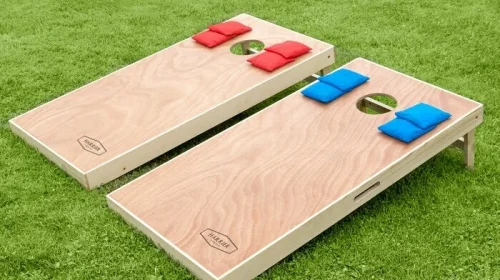
Choosing the right Cornhole Game Set can make a significant difference to the playing experience. A complete kit typically includes two raised boards and several bean bags, providing the essential equipment needed for a match. However, sets can differ in materials, dimensions, portability, construction, and included accessories. Understanding these features helps buyers select a kit that suits their available space, intended use, and preferred style of play.
What Is a Cornhole Game?
Cornhole is an outdoor throwing game in which players aim to toss small fabric bags filled with suitable material onto a raised board with a hole near its upper end. The objective is to score points by landing bags on the board or getting them through the hole.
The game is commonly played individually or in teams. Players take turns throwing bags from a designated distance, and the scores are calculated after each round.
Its straightforward format makes cornhole suitable for:
- Family gatherings and backyard parties
- Picnics and camping trips
- School and community events
- Outdoor celebrations
- Recreational activities at parks
- Friendly competitions between friends
Because players can adjust their throwing techniques and strategies over time, the game offers entertainment for beginners as well as experienced participants.
What Should a Complete Cornhole Game Set Include?
Before purchasing a kit, check that it contains the essential components required for play. A complete set generally includes the following items.
1. Two Cornhole Boards
The boards are the main playing surfaces. They are usually rectangular, slightly inclined, and designed with a circular hole near the upper section.
A standard two-board arrangement allows players to stand at opposite ends and take turns throwing their bags. Buyers should check the board dimensions and construction to ensure that the design matches their intended playing environment.
2. Bean Bags
Bean bags are small fabric pouches filled with suitable material. They are designed to be comfortable to grip and easy to throw.
Most recreational sets include multiple bags in two contrasting colors, allowing players to distinguish between teams. The fabric should be durable, and the stitching should be strong enough to withstand repeated use.
3. Supporting Legs or Stands
Raised boards need stable support. Some models have permanently attached legs, while others feature folding or removable supports.
A secure support system helps keep the boards steady during play. Folding legs can also make transportation and storage more convenient.
4. Carrying Case
Some complete kits include a storage or carrying bag. This accessory is useful for people who frequently transport their game equipment to parks, campsites, or outdoor events.
A carrying case can help keep the boards and bean bags organized when the game is not in use.
5. Instructions and Game Rules
Beginners may appreciate a set that includes a basic instruction guide. Clear rules help players understand scoring, turn order, and common gameplay procedures without needing to research them separately.
Important Features to Consider When Choosing a Cornhole Game Set
Not all cornhole kits are designed for the same purpose. Some prioritize portability, while others focus on durability or a more traditional playing experience.
Board Material and Construction
Board material is one of the most important factors to examine.
Common options include:
- Solid wood: Offers a traditional appearance and can provide a substantial playing surface. Quality depends on the type of wood, thickness, and construction.
- Plywood: Can provide a practical balance between strength and weight when properly manufactured.
- Plastic: Often lightweight and convenient for casual recreational use, although construction quality varies.
- Composite materials: May offer a combination of durability and reduced weight, depending on the design.
Look for smooth surfaces, secure joints, and a well-constructed frame. Poorly finished edges or weak connections may affect the board’s stability and long-term condition.
Board Dimensions
Board size affects how the game feels and how much space is needed.
Regulation-style cornhole boards are generally 48 inches long and 24 inches wide, with a six-inch circular hole positioned near the upper end. Recreational sets may use smaller dimensions to improve portability or suit younger players.
If authentic competitive-style play is important, check the dimensions before purchasing. For casual family activities, a smaller board may be more practical.
Stability and Support
A board should remain steady when bags land on its surface. Unstable legs can cause movement and interrupt gameplay.
Examine the following details:
- Strength of the legs and connecting joints
- Quality of hinges or locking mechanisms
- Stability on suitable flat ground
- Resistance to wobbling during normal play
- Ease of folding and unfolding
A stable structure improves consistency and makes the game more enjoyable.
Bean Bag Quality
Bean bags are handled and thrown repeatedly, so their construction matters.
Consider fabric strength, stitching, filling, weight, and overall shape. Bags should feel comfortable to hold and maintain their structure during regular recreational use.
Two contrasting colors are especially helpful because they make it easier to identify each team’s throws and calculate scores.
Surface Finish
The board surface affects how bags land and slide. A smooth, consistent finish can provide a more predictable playing experience.
For wooden boards, check whether the surface has been sanded properly and finished evenly. Avoid products with rough patches, exposed splinters, or uneven edges.
Portability and Storage
If the game will be used in several locations, transportation should be part of the buying decision.
Foldable legs, lightweight materials, compact designs, and carrying cases can make a set easier to move. Buyers with limited storage space may prefer boards that can be stacked or stored vertically.
Standard-Size and Portable Cornhole Sets Compared
Different designs offer different advantages. The best option depends on where and how frequently the game will be played.
| Feature | Standard-size set | Portable set |
|---|---|---|
| Board dimensions | Typically regulation-style | Often smaller |
| Transportation | May be heavier and bulkier | Usually easier |
| Storage | Requires more space | Often more compact |
| Playing experience | Closer to traditional play | Suitable for casual recreation |
| Intended use | Home games and organized events | Travel, picnics, and informal gatherings |
| Construction | Often emphasizes a substantial board | Often emphasizes lightweight design |
A standard-size set may be suitable for people who have a dedicated outdoor playing area. A portable kit can be a better choice for families who want to take the game on trips or store it easily between uses.
How to Choose a Set for Different Types of Players
The ideal kit depends on the people who will use it and the environment in which it will be played.
For Families
Families may benefit from a set that is easy to assemble, stable, and suitable for different skill levels. Colorful bean bags and straightforward instructions can make the game more approachable for children and adults.
For younger participants, adult supervision and age-appropriate equipment are important.
For Backyard Parties
A sturdy, standard-style set can work well for regular backyard entertainment. Look for durable construction, a consistent playing surface, and enough equipment for two teams.
For Camping and Travel
Portable designs are useful when storage space is limited. Lightweight boards, folding legs, and a carrying case can make a kit more convenient to transport.
For Schools and Community Events
Equipment used by multiple participants should be durable and easy to maintain. Strong boards, reinforced construction, and clearly distinguishable bean bag colors can help organize group activities.
For Competitive Practice
Players interested in developing their skills should consider a set with regulation-style dimensions and a consistent playing surface. Matching the board dimensions and playing arrangement to established standards can make practice more representative of organized play.
Understanding Basic Cornhole Rules
One reason cornhole is popular is that its basic rules are relatively simple.
Setting Up the Game
Place the two boards on a flat playing area, with their inclined surfaces facing the players. For regulation-style play, the front edges of the boards are generally placed 27 feet apart.
For casual games, players can adjust the distance to suit their age, ability, or available space.
Taking Turns
Players or teams take turns throwing their bags toward the opposite board. In common formats, each player throws four bags during a round.
Players should remain behind the designated throwing line when releasing their bags.
Scoring Points
The traditional scoring system awards:
- Three points: A bag passes through the hole.
- One point: A bag remains on the board at the end of the round.
- Zero points: A bag lands outside the board or touches the ground before coming to rest on it.
Many games use cancellation scoring, in which opposing teams’ points are subtracted from each other during each round.
For example, if one team scores five points and the other scores three, the first team receives two points for that round.
Traditional games commonly use 21 points as the winning target, although recreational groups may agree on alternative scoring rules before playing.
Tips for Getting More Enjoyment From Cornhole
A few simple practices can improve the experience for beginners and regular players.
- Choose a suitable playing surface: Place the boards on level ground to reduce unwanted movement.
- Establish a clear throwing area: Keep the space around the boards free from obstacles.
- Use consistent throwing distances: Agree on the distance before starting a match.
- Practice a comfortable grip: Hold each bag securely without squeezing it excessively.
- Develop a consistent throwing motion: Repeating a controlled technique can improve accuracy.
- Keep score clearly: Use a scorecard or simple scoreboard to avoid confusion.
- Encourage fair play: Make sure everyone understands the rules and takes turns.
- Adjust for younger players: Shorter throwing distances can make casual games more accessible.
Maintaining Your Cornhole Game Equipment
Regular care can help extend the usable life of a game set.
Clean the Boards
Remove dust and dirt with a soft cloth. For stubborn marks, follow the manufacturer’s cleaning recommendations and avoid methods that could damage the finish.
Store Equipment Properly
Keep boards and bean bags in a dry, protected location when they are not being used. Prolonged exposure to moisture can damage some wooden components and affect fabric materials.
Inspect the Structure
Check legs, hinges, screws, and joints periodically. Tighten or repair loose components according to the manufacturer’s instructions.
Protect the Bean Bags
Keep bags clean and dry. Inspect seams regularly and replace damaged bags when necessary.
Avoid Unnecessary Weather Exposure
Even outdoor-friendly equipment can deteriorate if left exposed to rain, extreme sunlight, or damp conditions for extended periods. Use a suitable protective cover or store the kit indoors after playing.
Common Mistakes to Avoid When Buying a Cornhole Kit
A low price does not always indicate good value. Buyers should examine the full product specification rather than focusing only on appearance or cost.
Common mistakes include:
- Ignoring board dimensions: A compact recreational set may not be suitable for regulation-style play.
- Overlooking material quality: Weak frames or poorly finished surfaces may wear out quickly.
- Assuming all kits are complete: Some products may not include enough bean bags or storage accessories.
- Neglecting portability: A heavy set can be inconvenient for people who travel frequently.
- Not checking the support system: Unstable legs can affect normal gameplay.
- Ignoring maintenance requirements: Different materials may require different care routines.
- Choosing without considering users: A set designed for competitive practice may not be the most convenient option for young children or occasional family activities.
Reviewing these details before purchasing can help avoid disappointment and make it easier to find a suitable product.
Conclusion
A complete cornhole kit can provide hours of outdoor entertainment for families, friends, schools, and community groups. When selecting equipment, pay attention to board materials, dimensions, stability, bean bag quality, surface finish, and portability.
The right Cornhole Game Set should match the intended playing environment and the needs of its users. A durable standard-size design may suit regular backyard games and competitive practice, while a compact portable option can be more convenient for travel and occasional recreation.
By comparing construction quality and included accessories before making a purchase, buyers can choose an outdoor game kit that offers a practical balance of convenience, durability, and enjoyable play.