

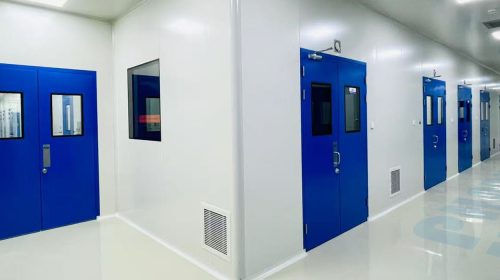
Cleanroom environments are critical in industries where even the smallest particle contamination can affect product quality, safety, and compliance. Sectors such as pharmaceuticals, biotechnology, medical devices, and semiconductors rely heavily on highly controlled environments to maintain strict regulatory standards.
Engineering plays a foundational role in ensuring that these environments are designed, built, and operated with precision. From airflow control to material selection, every detail must be carefully planned to meet international cleanroom classifications and operational requirements.
Engineering plays a central role in cleanroom projects from conceptual design to validation. In many industries such as pharmaceuticals, biotechnology, and semiconductor manufacturing, the demand for contamination-controlled environments has increased significantly. To meet these requirements, organizations often depend on advanced Turnkey Cleanroom Solutions that combine design, construction, and compliance under a single framework. Effective engineering ensures that every system is integrated seamlessly, reducing risk, improving efficiency, and ensuring long-term operational stability.
Table of Contents
ToggleImportance of Engineering in Cleanroom Design
The design phase of a cleanroom is where engineering decisions have the greatest long-term impact. Engineers must evaluate airflow patterns, pressure differentials, filtration systems, and material compatibility to ensure a controlled environment is maintained at all times.
A poorly designed cleanroom can lead to contamination risks, energy inefficiency, and regulatory non-compliance. Therefore, engineering precision is essential in creating layouts that support both operational workflow and contamination control.
Key design considerations include:
- Air change rates and filtration efficiency (HEPA/ULPA systems)
- Pressure cascade between clean zones
- Temperature and humidity control
- Surface materials that minimize particle shedding
Each of these elements must be aligned with international standards such as ISO 14644 and GMP guidelines.
Key Engineering Disciplines Involved
Turnkey cleanroom projects require collaboration across multiple engineering disciplines. Each discipline contributes a specific layer of functionality to ensure the cleanroom performs as intended.
Mechanical and HVAC Engineering
HVAC systems are the backbone of cleanroom performance. Mechanical engineers design air handling units, ducting systems, and filtration setups that maintain strict environmental conditions. Proper airflow distribution helps prevent contamination buildup and ensures uniform cleanliness across zones.
Electrical Engineering
Electrical engineering ensures uninterrupted power supply for critical systems such as monitoring devices, lighting, and control panels. Redundancy systems are often incorporated to prevent downtime, especially in pharmaceutical production environments where continuous operation is essential.
Structural Engineering
Structural engineers focus on building layouts, load-bearing capacity, and material selection. Cleanrooms often require modular wall systems, anti-static flooring, and vibration-resistant structures to maintain stability and cleanliness.
Validation and Compliance Engineering
This discipline ensures that the cleanroom meets regulatory standards. Engineers conduct testing such as particle count analysis, airflow visualization, and pressure differential verification to validate system performance.
Project Integration and Compliance
One of the most complex aspects of cleanroom development is integrating all engineering systems into a cohesive structure. Coordination between disciplines is essential to avoid design conflicts and operational inefficiencies.
Modern turnkey approaches streamline this process by centralizing design, construction, and validation under a unified engineering framework. This reduces communication gaps and ensures faster project delivery without compromising quality.
Regulatory compliance is another critical factor. Cleanrooms must adhere to strict guidelines depending on the industry. For example:
- Pharmaceutical cleanrooms must comply with GMP standards
- Semiconductor facilities require ultra-low particulate control
- Biotechnology labs often need biosafety containment levels
Engineering teams must ensure that every system is designed with these requirements in mind from the beginning.
Benefits of Strong Engineering in Turnkey Projects
Strong engineering expertise significantly enhances the success of cleanroom projects. When engineering is integrated effectively, organizations experience improved performance, reduced risks, and better cost efficiency.
Some key benefits include:
- Faster project completion through coordinated design and execution
- Reduced operational risks due to precise environmental control
- Improved energy efficiency through optimized HVAC systems
- Higher compliance success rates during audits and inspections
- Scalable designs that support future expansion
By combining technical expertise with structured project management, engineering ensures that cleanrooms remain reliable and adaptable to evolving industry needs.
Conclusion
Engineering is the backbone of every successful cleanroom project. From initial design to final validation, each stage depends on precise technical planning and execution. As industries continue to demand higher levels of contamination control, the importance of integrated engineering becomes even more significant.
Turnkey approaches simplify this complexity by unifying all engineering disciplines into a single coordinated process. This ensures that cleanrooms are not only compliant and efficient but also future-ready for evolving industrial requirements.


