
Modern industrial processing continues to evolve as manufacturers demand finer particle sizes, better dispersion quality, and higher energy efficiency. Industries such as coatings, pharmaceuticals, chemicals, inks, and advanced materials increasingly rely on advanced grinding solutions to meet strict performance standards.
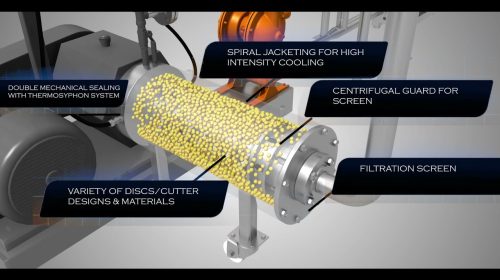
A modern bead mill machine has become a central piece of equipment in this evolution, offering improved grinding efficiency, better process control, and enhanced output consistency compared to traditional milling systems. Continuous innovation in design and technology has significantly expanded its industrial capabilities.
Table of Contents
ToggleEvolution of Bead Milling Technology
Bead milling technology has developed from simple mechanical grinding systems into highly engineered precision machines. Earlier versions relied on basic agitation mechanisms, while modern systems incorporate advanced engineering principles for improved efficiency and control.
This evolution has focused on three major goals:
- Increasing grinding efficiency
- Improving particle size uniformity
- Reducing energy consumption
These improvements have made bead mills essential for high-performance industrial applications.
Advanced Grinding Chamber Design
One of the most significant innovations in modern bead milling is the redesign of the grinding chamber. New chamber geometries are engineered to optimize bead movement and improve energy transfer efficiency.
Modern designs help to:
- Enhance collision frequency between beads and particles
- Reduce dead zones inside the chamber
- Improve flow distribution of materials
- Increase overall grinding efficiency
These improvements result in faster processing and more uniform particle size reduction.
Improved Grinding Media Technology
Grinding media plays a crucial role in bead milling performance. Recent innovations have led to the development of more durable, uniform, and efficient bead materials.
Key advancements include:
- High-strength ceramic beads for longer lifespan
- More uniform bead sizing for consistent grinding
- Improved wear resistance for reduced contamination
- Optimized density for better energy transfer
These enhancements improve both product quality and operational cost efficiency.
Enhanced Energy Efficiency Systems
Energy efficiency has become a major focus in modern bead mill design. New systems are engineered to maximize grinding performance while minimizing energy waste.
Innovations in this area include:
- High-efficiency motors with optimized power usage
- Improved rotor designs for better energy distribution
- Reduced friction components for lower energy loss
- Smart control systems for dynamic energy adjustment
These improvements help reduce operational costs while maintaining high productivity.
Smart Automation and Process Control
Automation is one of the most impactful innovations in modern grinding technology. Advanced bead mills now include intelligent control systems that monitor and adjust operating parameters in real time.
These systems can regulate:
- Rotor speed
- Feed rate
- Temperature levels
- Grinding time and pressure
Smart automation ensures consistent product quality and reduces the need for manual intervention, making operations more efficient and reliable.
Improved Temperature Management
Heat generation is a natural result of high-energy grinding. Modern bead mills incorporate advanced cooling and temperature control systems to maintain stable processing conditions.
Key innovations include:
- Efficient heat exchangers
- Integrated cooling jackets
- Real-time temperature monitoring sensors
- Adaptive cooling adjustments based on load
Better temperature control helps preserve material properties and improves overall output quality.
High-Precision Particle Size Control
Modern bead milling systems are designed to deliver highly precise particle size distribution. This is essential for industries that require consistent product performance.
Innovations supporting precision include:
- Adjustable rotor speed control
- Optimized bead size selection systems
- Improved separation mechanisms
- Enhanced circulation flow designs
These features ensure uniform grinding results across different materials and applications.
Reduced Maintenance and Longer Equipment Life
Another major innovation in bead milling technology is improved durability and reduced maintenance requirements. Modern machines are designed to withstand continuous industrial operation with minimal downtime.
Key improvements include:
- Wear-resistant internal components
- Improved seal systems to prevent leakage
- Modular designs for easier maintenance
- Longer-lasting grinding media compatibility
These enhancements help reduce operational interruptions and maintenance costs.
Expanding Industrial Applications
Due to continuous innovation, bead milling technology is now used in a wider range of industries than ever before.
Common applications include:
- High-performance coatings and paints
- Pharmaceutical formulations requiring fine suspensions
- Advanced ink and pigment processing
- Battery and energy storage materials
- Nanomaterial and specialty chemical production
Each application benefits from improved precision, efficiency, and scalability.
Future Trends in Bead Milling Technology
The future of bead milling is expected to focus on even greater automation, energy optimization, and material-specific customization.
Emerging trends include:
- AI-driven process optimization
- Real-time particle size monitoring
- Fully automated production systems
- Eco-friendly and energy-efficient designs
- Integration with Industry 4.0 manufacturing systems
These developments will further enhance efficiency and expand industrial applications.
Conclusion
Innovations in bead milling technology have significantly improved grinding efficiency, precision, and operational reliability. From advanced chamber designs to smart automation and energy-efficient systems, modern developments continue to push the boundaries of particle size reduction.
A modern bead mill machine represents the convergence of engineering precision and industrial efficiency, making it a vital tool in today’s high-performance manufacturing environments. As technology continues to advance, bead milling will remain at the forefront of modern grinding innovation.