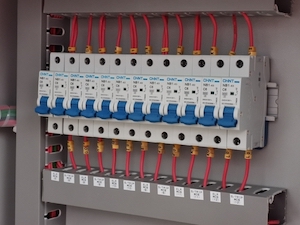
Electrical safety is a fundamental requirement in residential, commercial, and industrial environments. Electrical circuits supply power to lighting systems, household appliances, machinery, and other equipment that must operate within safe current limits. When an electrical fault occurs, excessive current can overheat conductors, damage connected devices, and increase the risk of fire. Protective equipment is therefore essential for maintaining reliable electrical distribution.
A mini circuit breaker is a widely used protective device designed to automatically disconnect a circuit when excessive current flows through it. Its compact construction, reusable operation, and dependable fault response make it suitable for many modern electrical installations. Understanding the features and advantages of a Mini Circuit Breaker can help electricians, contractors, and property owners make informed decisions when selecting circuit protection equipment.
What Is a Mini Circuit Breaker?
A Miniature Circuit Breaker (MCB) is an automatically operated electrical switch that protects circuits against overloads and short circuits. It monitors current flow and interrupts the electrical supply when the current exceeds the device’s specified operating limits.
Unlike traditional fuses, which generally require replacement after operating, an MCB can usually be reset after the cause of the fault has been identified and corrected.
MCBs are commonly installed in electrical distribution boards to protect individual circuits. They are available in different current ratings, breaking capacities, pole configurations, and tripping characteristics to accommodate various electrical requirements.
Key Features of a Mini Circuit Breaker
Modern MCBs include several features that support reliable operation and convenient electrical protection.
1. Automatic Fault Detection
An MCB automatically responds to abnormal current conditions. It does not require manual intervention to detect an overload or short circuit.
When a fault exceeds its operating limits, the internal mechanism activates and disconnects the protected circuit.
2. Thermal and Electromagnetic Protection
Most MCBs use two primary tripping mechanisms:
- Thermal protection: A bimetallic strip responds to sustained overcurrent by heating and bending, activating the trip mechanism.
- Electromagnetic protection: A magnetic mechanism responds rapidly to high fault currents, such as those produced by short circuits.
These mechanisms allow the device to respond to different types of overcurrent conditions.
3. Compact Construction
MCBs are designed with modular dimensions that allow them to fit into standard electrical distribution boards. Their compact design makes it possible to protect multiple circuits without requiring excessive installation space.
4. Reusable Operation
After a fault has been investigated and corrected, an MCB can generally be reset to restore power. This eliminates the need to replace a fuse element after every operation.
5. Multiple Ratings and Configurations
MCBs are available with different rated currents, voltage specifications, breaking capacities, and pole arrangements. This variety allows electrical professionals to select devices according to the requirements of individual circuits.
6. Clear Switching Indication
Most MCBs include an operating handle that indicates whether the device is switched on, switched off, or has tripped. This helps electricians identify the status of protected circuits during inspection and maintenance.
How Does a Mini Circuit Breaker Work?
The operating principle of an MCB is based on detecting excessive current and automatically interrupting the electrical connection.
Overload Protection
An overload occurs when a circuit carries more current than its intended capacity for an extended period. This can happen when several appliances operate simultaneously or when connected equipment develops a fault.
As excessive current flows through the MCB, its bimetallic strip heats up. The strip bends because its two bonded metals expand at different rates. Once the operating threshold is reached, it activates the trip mechanism and opens the contacts.
Short-Circuit Protection
A short circuit occurs when conductors with different electrical potentials come into unintended contact, creating a low-resistance path.
This condition can produce a very high current within a short time. The MCB’s electromagnetic mechanism responds to the resulting magnetic field and activates rapid disconnection.
Arc Interruption
When the breaker’s contacts separate under load or during a fault, an electrical arc may form. An internal arc chute helps divide and extinguish this arc, allowing the device to interrupt the current safely within its specified ratings.
Benefits of Using a Mini Circuit Breaker
MCBs offer several practical advantages that make them a common choice for modern electrical protection.
1. Improved Electrical Safety
By disconnecting circuits during overloads and short circuits, MCBs help reduce the risk of cable overheating, insulation damage, and electrical equipment failure.
2. Reduced Maintenance Requirements
Because an MCB can generally be reset after a fault has been corrected, it does not require routine replacement in the same way as a conventional fuse.
This makes circuit restoration more convenient and reduces the need to keep replacement fuse elements available.
3. Individual Circuit Protection
Electrical distribution boards often contain separate MCBs for lighting, socket outlets, appliances, and other electrical loads.
This arrangement allows faults to be isolated to individual circuits, provided the installation has been properly designed and coordinated.
4. Space-Efficient Installation
The compact modular design of MCBs makes them suitable for distribution boards where installation space is limited. Multiple circuits can be protected within an organized panel layout.
5. Reliable Operation
MCBs are designed to respond automatically to specified fault conditions. Their thermal and electromagnetic mechanisms provide different forms of overcurrent protection within one device.
6. Convenient Fault Identification
When an MCB trips, its operating handle changes position, helping maintenance personnel identify the affected circuit. This can make troubleshooting more straightforward.
Common Types of Mini Circuit Breakers
MCBs are available with different tripping characteristics to accommodate the electrical behavior of connected equipment.
| MCB type | Typical magnetic tripping range | Common applications |
|---|---|---|
| Type B | 3–5 times rated current | Residential lighting and general resistive loads |
| Type C | 5–10 times rated current | Commercial circuits and equipment with moderate inrush current |
| Type D | 10–20 times rated current | Certain motors, transformers, and high-inrush equipment |
The appropriate type depends on the connected load, expected starting current, cable protection requirements, and fault-loop conditions. Selection should be based on electrical calculations and applicable standards.
Common Electrical Applications of Mini Circuit Breakers
Because MCBs are available in different specifications, they can be used in many types of electrical installations.
Residential Electrical Systems
Homes use MCBs to protect lighting circuits, socket outlets, kitchen appliances, air conditioners, and other household equipment.
Separate circuit protection helps organize electrical distribution and makes it easier to identify faults without necessarily disconnecting the entire property.
Commercial Buildings
Offices, retail stores, restaurants, and hotels depend on reliable electrical distribution for lighting, computers, refrigeration, and other equipment.
MCBs help protect these circuits from excessive current and support more convenient maintenance.
Industrial Control Panels
MCBs may be used in suitable industrial control circuits, auxiliary systems, lighting installations, and smaller electrical loads.
Larger industrial applications may require additional or alternative protective devices depending on operating current and prospective fault levels.
Educational Institutions
Schools, colleges, and universities contain classrooms, laboratories, offices, and common areas with different electrical requirements.
MCBs help provide individual overcurrent protection for lighting, socket outlets, and other distribution circuits.
Retail and Hospitality Environments
Shops, restaurants, hotels, and entertainment venues use multiple electrical circuits to supply signs, lighting, kitchen equipment, and electronic systems.
Properly selected MCBs help protect these circuits while supporting organized electrical distribution.
Important Factors to Consider When Selecting an MCB
Choosing the right MCB requires evaluating several technical specifications rather than focusing on rated current alone.
Rated Current
The rated current should be appropriate for the expected circuit load and the current-carrying capacity of the connected conductors.
An oversized breaker may not provide adequate cable protection, while an undersized device may trip unnecessarily during normal operation.
Breaking Capacity
Breaking capacity indicates the maximum fault current that an MCB is designed to interrupt safely under specified conditions.
The selected rating must be sufficient for the prospective short-circuit current at the installation point.
Rated Voltage
The device must be suitable for the electrical system’s operating voltage and the intended AC or DC application.
Number of Poles
MCBs are available in different pole configurations, including:
- Single-pole
- Double-pole
- Three-pole
- Four-pole
The appropriate configuration depends on the supply arrangement and the conductors that need to be switched or protected.
Tripping Characteristics
The selection of Type B, Type C, or Type D should reflect the connected equipment’s operating behavior and the electrical installation’s fault conditions.
Product Quality and Standards
MCBs should meet relevant product standards and have specifications suitable for the intended application. Checking manufacturer documentation helps confirm their ratings, operating characteristics, and compatibility with the distribution board.
Mini Circuit Breaker vs. Traditional Fuse
Both MCBs and fuses provide overcurrent protection, but they operate differently.
| Feature | Mini Circuit Breaker | Traditional Fuse |
|---|---|---|
| Operating principle | Mechanical thermal and electromagnetic tripping | Melting of a fuse element |
| Reusability | Generally resettable | Requires replacement after operation |
| Fault indication | Operating handle changes position | Fuse element must be inspected |
| Manual switching | Available where the device is rated for switching | Not generally designed for repeated switching |
| Maintenance | Reset after correcting the fault | Replacement is necessary |
MCBs offer convenience and reusable operation, while correctly selected fuses remain useful protective devices in many electrical systems.
Installation and Maintenance Best Practices
Correct installation is essential for achieving the intended level of circuit protection.
- Use qualified electricians: Installation and electrical modifications should be performed by competent professionals.
- Check conductor capacity: Ensure that the MCB rating matches the cable’s current-carrying capacity and installation conditions.
- Verify breaking capacity: Confirm that the device can interrupt the expected fault current safely.
- Follow wiring instructions: Use the manufacturer’s approved connection and mounting arrangements.
- Inspect terminal connections: Loose connections can generate excessive heat and cause electrical failure.
- Label protected circuits: Clear identification makes inspection and fault isolation easier.
- Investigate repeated tripping: Frequent operation may indicate an overload, short circuit, or faulty appliance. Identify the cause before resetting the breaker.
An MCB should never be repeatedly reset without investigating the reason for its operation.
Understanding the Limitations of MCB Protection
Although MCBs provide essential overcurrent protection, they do not detect every type of electrical hazard.
For example, a standard MCB does not normally respond to low-level earth leakage that may create a risk of electric shock. Additional protective devices may therefore be required.
An RCCB detects residual-current imbalance and disconnects the circuit when leakage reaches its specified threshold. An RCBO combines this function with overload and short-circuit protection.
The correct arrangement depends on the electrical installation, connected equipment, and applicable safety regulations.
Conclusion
A mini circuit breaker is an important component of modern electrical protection systems. Its thermal and electromagnetic tripping mechanisms help protect circuits against overloads and short circuits, while its compact construction and resettable operation make it convenient for everyday use.
MCBs are widely applied in residential buildings, commercial properties, industrial control panels, and other electrical installations. Selecting the correct device requires careful attention to rated current, breaking capacity, voltage, pole configuration, and tripping characteristics.
When properly selected, professionally installed, and regularly inspected, a mini circuit breaker helps improve electrical safety, protect connected equipment, and support reliable power distribution.