Introduction
The food packaging industry is changing as restaurants, cafes, catering companies, and delivery services adapt to new consumer expectations. The increasing popularity of takeaway meals has created a need for packaging that is convenient, practical, and capable of maintaining food quality during transportation. Businesses are also paying greater attention to presentation, material selection, and packaging efficiency when choosing containers for their products.
Among the available packaging formats, Takeaway Bento Boxes have gained attention because of their compartment-based designs and flexible applications. These containers allow different meal components to be arranged in one package, making them suitable for modern food service operations. Their growing use reflects broader changes in eating habits, restaurant services, and food packaging requirements.
1. Expansion of Takeaway and Food Delivery Services
The growth of takeaway and food delivery has significantly influenced packaging requirements. Many consumers now order prepared meals for their homes, workplaces, and other locations instead of dining exclusively at restaurants.
This shift has encouraged food businesses to invest in containers that are easy to assemble, carry, store, and transport.
Bento-style packaging supports this demand by bringing several food components together in one container. Restaurants can use it for rice meals, salads, combination lunches, and other menu items that require organized presentation.
As delivery services become an established part of the food industry, practical meal packaging is likely to remain an important purchasing consideration.
2. Increasing Preference for Organized Meal Packaging
Modern consumers often prefer meals that contain several food items arranged in a convenient format.
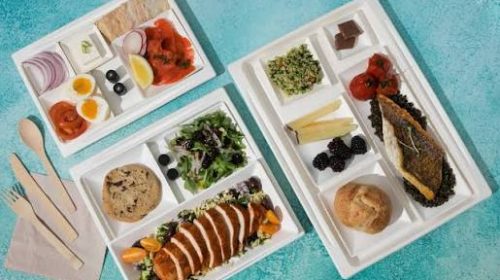
Bento boxes address this preference through separate compartments that help organize main courses, vegetables, snacks, and side dishes.
This structure is particularly useful for balanced meals and combination menus. Instead of placing everything in one large compartment, restaurants can give each ingredient its own designated space.
The result is a more organized meal that can be easier to identify, serve, and consume.
3. Growing Demand for Convenient Food Consumption
Busy lifestyles have increased interest in meals that can be carried and consumed in different settings.
Office workers, students, travelers, and people with demanding schedules often look for convenient lunch options. Packaging that combines several food items in one container can make these meals easier to transport.
Bento-style containers are suitable for this purpose because they can hold multiple ingredients together without requiring several separate packages.
Their convenience also makes them relevant to meal preparation businesses and catering services that distribute individual portions.
4. Versatility Across Different Food Categories
Another factor contributing to the popularity of bento boxes is their versatility.
Unlike containers designed for a single food category, bento-style packaging can accommodate a wide range of meals.
Common applications include:
- Rice dishes with vegetables and proteins.
- Noodles and accompanying side dishes.
- Salads with separate toppings.
- Sandwiches, fruit, and snacks.
- Vegetarian and balanced meal combinations.
- Prepared lunches for catering services.
Different compartment arrangements allow businesses to select packaging according to their menus and portion requirements.
This flexibility makes bento boxes useful for food businesses with diverse product offerings.
5. Greater Attention to Food Presentation
Food presentation has become an important part of the customer experience, especially in takeaway and online food services.
Customers cannot always see how their meals are prepared, so packaging provides an opportunity to create a positive first impression when an order arrives.
Bento boxes help organize ingredients into separate sections, allowing restaurants to display colors, textures, and portions more clearly.
This can make combination meals look more structured and appealing. It also supports consistent presentation across multiple orders.
6. Opportunities for Restaurants and Cafes
Restaurants and cafes are continually looking for ways to improve their takeaway operations while maintaining menu quality.
Bento packaging can support these businesses by simplifying the arrangement of meals containing multiple ingredients.
For example, a cafe can package a sandwich, fruit, and dessert in separate sections. A restaurant can use a similar format for rice, meat, and vegetable combinations.
Using an appropriate container design may also reduce the need for multiple individual packages, depending on the menu.
This makes bento-style packaging a practical option for businesses offering complete meal sets.
7. Importance of Material Innovation
Material selection is an important consideration in the modern packaging industry.
Manufacturers produce bento boxes using different materials, including cardboard, paperboard, plastic, and molded fiber. Each material offers different characteristics related to strength, moisture resistance, weight, and appearance.
Paper-based packaging has attracted interest from businesses exploring fiber-based alternatives to conventional plastic containers.
However, paperboard performance depends on its thickness, construction, and protective treatments. Plastic containers may offer useful moisture resistance, while molded fiber products provide another option for specific food applications.
Manufacturers continue to explore ways to improve material performance while meeting food-contact requirements.
8. Sustainability Influencing Packaging Decisions
Environmental considerations are increasingly included in packaging purchasing decisions.
Restaurants and food service companies are examining the materials used in disposable containers and looking for options that align with their sustainability objectives.
Cardboard and paperboard bento boxes made from responsibly sourced or recycled fibers may support more resource-conscious purchasing strategies.
Nevertheless, recyclability depends on the complete packaging structure. Coatings, plastic laminations, adhesives, and food contamination can influence whether a container can be processed through local recycling systems.
Businesses should review product specifications and local disposal facilities before making environmental claims.
9. Growth of Meal Preparation and Catering Businesses
Meal preparation and catering services have created additional applications for compartment-based packaging.
Meal preparation companies often distribute food according to planned portions and specific nutritional combinations. Separate compartments make it easier to organize proteins, vegetables, grains, and other ingredients.
Catering businesses also use individual meal containers for corporate events, conferences, educational institutions, and private functions.
Bento-style packaging can simplify distribution because multiple meal components are arranged within one package.
As these services develop, demand for different container sizes and compartment configurations may increase.
10. Customization and Brand Differentiation
Packaging has become an important branding tool for restaurants and food companies.
Businesses increasingly seek containers that reflect their visual identity through printed logos, brand colors, and customized designs.
Bento boxes can provide suitable surfaces for branding, depending on the material and manufacturing method.
Customization may include:
- Printed business logos.
- Brand-specific colors and patterns.
- Special container dimensions.
- Different compartment arrangements.
- Printed product or handling information.
Distinctive packaging can help customers recognize a restaurant and create a more consistent appearance across takeaway orders.
11. Demand for Efficient Packaging Operations
Restaurants need packaging that supports fast and reliable food preparation.
During busy periods, employees must assemble orders quickly while maintaining consistency. Containers that are easy to fold, fill, close, and store can support smoother kitchen operations.
Bento boxes can simplify the packaging of combination meals by providing designated sections for different ingredients.
Their practical design may also help businesses standardize meal assembly and reduce the number of separate containers needed for certain orders.
However, the actual operational benefits depend on the container’s structure and the restaurant’s menu.
12. Importance of Food Safety and Protection
As takeaway packaging becomes more specialized, food safety remains a central requirement.
Containers must be suitable for the food they hold and should protect meals from contamination during normal handling and transportation.
Important considerations include:
- Food-contact material compliance.
- Secure closure systems.
- Appropriate moisture and grease resistance.
- Structural strength.
- Temperature compatibility.
- Hygienic storage and handling.
Businesses should verify manufacturer specifications and follow relevant food safety regulations.
For meals containing sauces or liquids, additional sealed containers may be necessary because compartment walls do not automatically provide leakproof performance.
13. Technology and Innovation in Bento Packaging Manufacturing
Manufacturing technology continues to influence how food containers are designed and produced.
Improvements in cutting, folding, molding, printing, and material processing can help manufacturers develop more consistent packaging products.
Automation may also support higher production efficiency and repeatable quality control.
In addition, manufacturers are exploring improved barrier treatments, stronger fiber-based structures, and more practical compartment layouts.
These developments may help food businesses access packaging that better matches their performance and customization requirements.
14. Factors Businesses Consider When Purchasing Bento Boxes
As demand grows, buyers must compare products carefully to ensure they meet operational needs.
Some important purchasing factors include:
Material quality: The container should be suitable for the food’s temperature, moisture, and grease content.
Compartment design: The layout should accommodate the ingredients and portions served by the business.
Container dimensions: Proper sizing helps prevent overcrowding and unnecessary empty space.
Closure performance: Lids and folding structures should remain secure during normal handling.
Customization options: Printing and design flexibility may support brand identity.
Supplier reliability: Consistent quality, production capacity, and delivery schedules are important for long-term purchasing.
Testing samples before placing bulk orders can help businesses evaluate these factors more accurately.
15. The Role of Packaging Suppliers in Meeting Market Demand
Reliable suppliers play an important role in supporting the growing food packaging market.
Restaurants and distributors need manufacturers that can provide consistent product specifications, suitable material choices, and dependable production schedules.
When evaluating suppliers, buyers should examine their manufacturing capabilities, quality control processes, customization services, and communication practices.
Businesses exploring different bento packaging options can review the product range from Uchampak when comparing available designs and specifications for food service applications.
Building a reliable supplier relationship can help businesses maintain packaging availability as their takeaway operations expand.
16. Future Trends in the Takeaway Bento Box Market
The demand for compartment-based food packaging is expected to continue evolving alongside changes in food service and consumer preferences.
Several developments may influence future product designs.
More Advanced Fiber-Based Materials
Manufacturers may continue improving paperboard and molded fiber structures to provide better strength and barrier performance.
Flexible Compartment Configurations
More varied layouts may help businesses package different meal combinations using containers suited to specific menu requirements.
Greater Customization
Brand-specific printing and packaging dimensions may become increasingly important as restaurants seek to create distinctive customer experiences.
Improved Storage and Transportation Designs
Stackable structures and more efficient packaging dimensions may help businesses manage storage space and delivery operations.
Greater Focus on Material Transparency
Food businesses may increasingly request detailed information about material composition, food-contact suitability, and disposal options.
These trends highlight the importance of balancing functionality, presentation, cost, and environmental considerations.
Conclusion
The growing demand for takeaway bento boxes reflects broader changes in modern food consumption and packaging requirements. Their compartment-based designs support organized meal presentation, convenient transportation, portion control, and flexible menu applications.
Restaurants, cafes, catering companies, and meal preparation businesses can use these containers for a wide range of food products. At the same time, developments in materials, customization, and manufacturing technology are creating new possibilities for packaging design.
As the food packaging industry continues to evolve, businesses will need to evaluate container quality, food safety, material performance, and supplier reliability. Choosing packaging based on actual operational needs can help support efficient food service and a better customer experience.