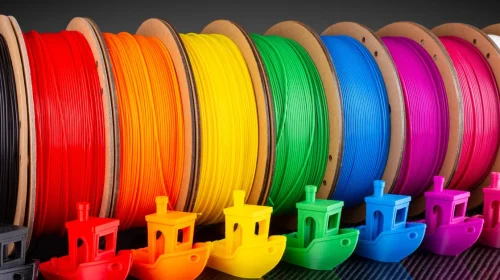
Choosing the right material can significantly impact the success of your 3D printing or manufacturing project. PETG has gained widespread attention for its ability to balance strength, visual quality, and ease of printing. It is commonly used in both functional and aesthetic applications, offering reliable performance without the complexity of more demanding materials.
A major advantage of PETG is its versatility. It combines the simplicity of PLA with improved durability and flexibility, making it suitable for a wide range of users. Whether you are prototyping or producing end-use parts, PETG delivers consistent results across different project requirements.
Table of Contents
ToggleUnderstanding PETG as a Material
PETG (Polyethylene Terephthalate Glycol) is a modified thermoplastic designed to improve strength and reduce brittleness. The addition of glycol enhances its clarity and impact resistance while making it easier to process.
This material is known for producing smooth, glossy finishes and can even achieve semi-transparent or clear results. Its combination of mechanical strength and visual appeal makes it a preferred option for both functional and design-focused projects.
Strength: Built for Reliability
One of the primary reasons to choose PETG is its excellent strength. It is more durable than PLA and less prone to cracking under stress, making it suitable for parts that need to perform over time.
Key Strength Benefits
- High impact resistance
- Strong layer adhesion in 3D prints
- Withstands repeated use and stress
- Suitable for load-bearing components
These properties make PETG ideal for mechanical parts, brackets, and protective enclosures.
Clarity: Enhancing Visual Appeal
PETG stands out for its ability to deliver clear or semi-transparent prints. This makes it especially useful for projects where appearance plays an important role.
Common Applications for Clarity
- Display cases and covers
- Light diffusers and panels
- Fluid containers
- Decorative and design elements
Its natural gloss and transparency can elevate the overall quality of finished products.
Performance: A Balanced Approach
PETG offers a well-rounded performance profile, combining multiple benefits in one material.
Ease of Printing
PETG is relatively easy to print and does not require a fully enclosed printer like ABS. It has low warping and adheres well to most print beds.
Temperature Resistance
It performs better than PLA in moderately warm environments, maintaining its structure without deforming easily.
Chemical and Moisture Resistance
PETG resists water and many chemicals, making it suitable for outdoor use and environments where exposure to liquids is common.
Flexibility
Its slight flexibility allows it to absorb stress without breaking, improving durability in functional applications.
Ideal Use Cases for PETG
PETG is a strong choice for projects that demand both performance and aesthetics.
- Functional prototypes
- Mechanical components
- Outdoor parts
- Food-safe containers (depending on filament quality)
- Transparent or semi-transparent designs
Its versatility makes it suitable for both professional and personal use.
Limitations to Consider
Despite its advantages, PETG does have some drawbacks that should be considered:
- Can produce stringing during printing
- Slightly softer surface prone to scratches
- Not ideal for high-temperature environments
- Flexibility may not suit rigid designs
Understanding these limitations helps in achieving better results and selecting the right material for your needs.
Tips for Working with PETG
To get the best performance from PETG, consider the following:
- Use a nozzle temperature between 220°C and 250°C
- Maintain a heated bed around 70°C to 90°C
- Adjust retraction settings to reduce stringing
- Use moderate cooling for strong layer bonding
These adjustments can significantly improve print quality and durability.
Conclusion
PETG is a dependable and versatile material that offers an excellent balance of strength, clarity, and performance. Its ability to handle functional demands while maintaining visual appeal makes it a valuable choice for a wide range of applications.
For anyone seeking a material that is easy to use yet capable of delivering durable, high-quality results, PETG remains a practical and effective option.