Industrial valve manufacturing often involves more than producing standard equipment. Different projects require specific dimensions, materials, pressure ratings, connection types, and operating mechanisms. Original Equipment Manufacturer (OEM) solutions help meet these requirements by allowing buyers to work with manufacturers on products designed around their technical specifications. For butterfly valves, manual operating systems are an important part of this customization process because they influence how operators control flow and maintain pipeline equipment.
An OEM Butterfly Valve Munual solution can support projects that require manually operated butterfly valves manufactured according to customer requirements. These solutions may include customized valve dimensions, body materials, disc configurations, sealing components, and operating mechanisms such as levers or gearboxes. By coordinating these specifications with an OEM manufacturer, industrial buyers can obtain valve products that are more compatible with their equipment, installation conditions, and operational needs.
1. Understanding OEM Butterfly Valve Manufacturing
OEM manufacturing refers to the production of equipment according to another company’s specifications, drawings, technical requirements, or branding arrangements. In the valve industry, this approach allows buyers to source products that match particular project requirements without developing an entire manufacturing facility themselves.
For butterfly valves, OEM services may cover:
- Valve body and disc dimensions
- Material selection
- Seat and sealing configurations
- Pressure and temperature ratings
- Wafer, lug, or flanged connection designs
- Manual operating mechanisms
- Product markings and packaging
The exact customization options depend on the manufacturer’s engineering capabilities and production processes. Clear technical communication is therefore essential before manufacturing begins.
2. How Manual Butterfly Valves Work
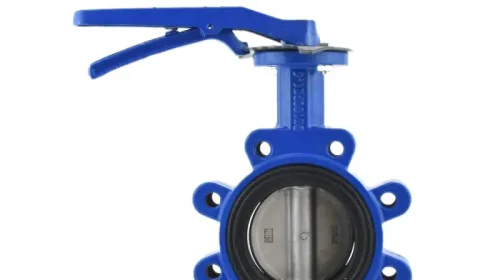
A manual butterfly valve controls fluid flow through a rotating disc positioned inside the valve body. The disc is connected to a shaft, which transfers movement from the external operating mechanism.
When an operator turns the lever or gearbox handwheel, the shaft rotates the disc. A quarter-turn movement typically changes the valve between its open and closed positions.
In the open position, the disc allows fluid to pass through the pipeline. When closed, it works with the valve seat to restrict or stop flow.
This relatively simple operating principle makes manual butterfly valves useful in systems where local operation is practical and automatic control is not essential.
3. Customizing Manual Operating Mechanisms
The operating mechanism is an important consideration when designing an OEM butterfly valve. The appropriate arrangement depends on valve size, operating torque, installation accessibility, and the frequency of operation.
Lever-Operated Valves
Lever handles are commonly used on smaller butterfly valves where manual operation requires relatively little effort. They provide straightforward control and allow operators to move the disc through a quarter-turn motion.
Gear-Operated Valves
Larger valves may require more operating torque. A gearbox with a handwheel can reduce the effort needed to open or close the valve and provide more controlled movement.
Locking Arrangements
Some applications require the valve to remain in a selected position. Locking devices can help prevent unintended operation, subject to the valve’s design and application requirements.
OEM manufacturers can evaluate these options according to the valve’s torque requirements and the customer’s operating preferences.
4. Selecting Materials for Customized Butterfly Valves
Material selection directly affects valve durability, corrosion resistance, and compatibility with the transported medium.
Common valve body materials include cast iron, ductile iron, carbon steel, and stainless steel. Each has different mechanical and environmental characteristics.
The disc and shaft also require careful consideration because they are exposed to the operating medium and mechanical forces. Seat materials such as EPDM, NBR, and other suitable elastomers may be selected according to fluid compatibility and temperature requirements.
For example, a water distribution project may have different material requirements from a chemical processing facility. Buyers should provide accurate information about the fluid, operating temperature, and environmental conditions so the manufacturer can recommend suitable combinations.
5. Adapting Valve Dimensions and Connection Types
OEM manufacturing allows butterfly valves to be produced in configurations that suit specific pipeline arrangements.
Common connection designs include:
Wafer butterfly valves: These fit between compatible pipeline flanges and are often selected for compact installations.
Lug butterfly valves: These feature threaded lugs around the body and can support particular installation and maintenance arrangements.
Flanged butterfly valves: These have integrated flange connections and are used where the pipeline design requires this configuration.
Buyers should confirm nominal diameter, face-to-face dimensions, flange drilling standards, pressure class, and available installation clearance. Accurate dimensional information helps avoid compatibility problems during installation.
6. Supporting Different Industrial Applications
OEM manual butterfly valve solutions can be adapted for a wide range of industrial environments.
Water Supply and Treatment
Water treatment facilities use butterfly valves in distribution pipelines, pumping stations, and treatment equipment. Suitable materials and sealing components help support dependable flow isolation.
HVAC and Building Services
Heating and cooling systems use manual butterfly valves in water circulation networks. Their compact construction can make them suitable for mechanical rooms and utility installations.
Manufacturing Facilities
Industrial plants often need valves for utility lines and process systems. OEM customization can help match the valve configuration to existing machinery and pipeline dimensions.
Chemical Processing
Chemical applications require careful material compatibility assessments. Valve body, disc, shaft, and seat materials should be selected according to the chemical properties and operating conditions of the medium.
Power Generation
Power plants use butterfly valves in selected cooling-water and auxiliary systems. Project-specific dimensions and operating arrangements can help support integration into plant infrastructure.
The suitability of any valve depends on its design ratings and the specific conditions of the application.
7. Benefits of OEM Manufacturing for Industrial Buyers
Working with an OEM manufacturer offers several potential advantages when standard manual butterfly valves do not fully meet project requirements.
Application-specific configurations: Buyers can define materials, dimensions, connections, and operating mechanisms according to their technical needs.
Product consistency: Agreed specifications and manufacturing procedures can help maintain consistency across multiple production batches.
Equipment compatibility: Customized dimensions and mounting arrangements can improve compatibility with existing pipeline systems.
Branding flexibility: Depending on the manufacturer’s services, OEM orders may include customer-specific product markings, labels, or packaging.
Production coordination: Working directly with a manufacturer can make it easier to discuss drawings, technical changes, inspection requirements, and delivery schedules.
These advantages depend on clear specifications and the manufacturer’s ability to meet the agreed requirements.
8. Important Quality Checks During OEM Production
Quality assurance is essential because customized products must meet specific requirements rather than simply resemble a standard valve model.
A reliable manufacturing process should include checks at several stages.
Material Inspection
Incoming materials should be checked against the approved specifications. Material documentation may also be required for projects with traceability requirements.
Machining and Dimensional Inspection
Valve body dimensions, disc alignment, shaft measurements, and connection details should be inspected to confirm conformity with approved drawings.
Assembly Inspection
The manufacturer should verify that the disc, shaft, seat, and operating mechanism are assembled correctly.
Pressure and Leakage Testing
Testing should be performed according to the applicable product standards and agreed inspection requirements. Buyers should confirm the required test procedures and acceptance criteria before production.
Final Documentation
Depending on the project, relevant documents may include inspection reports, material certificates, dimensional records, and pressure test results.
9. What Buyers Should Discuss with an OEM Manufacturer
Before placing an order, buyers should prepare a detailed technical specification. This helps the manufacturer understand the intended application and identify any design considerations.
Important information includes:
- Required valve diameter and quantity
- Operating pressure and temperature
- Type of fluid being transported
- Valve body, disc, shaft, and seat materials
- Wafer, lug, or flanged connection preference
- Lever or gearbox operating requirements
- Applicable design and testing standards
- Required drawings and inspection documents
- Packaging and delivery expectations
Buyers should also request technical drawings for review before mass production. Confirming dimensions and operating details at this stage can reduce misunderstandings and costly modifications later.
10. Choosing the Right OEM Manufacturing Partner
The quality of an OEM butterfly valve depends not only on its design but also on the manufacturer’s engineering knowledge, production capabilities, and quality management procedures.
When evaluating potential suppliers, buyers should consider manufacturing experience, available product configurations, material sourcing, inspection facilities, and communication practices.
It is also useful to understand how the manufacturer handles customized drawings, production changes, sample approvals, and after-sales support.
A supplier that communicates clearly and provides relevant technical documentation can make the procurement process more predictable, particularly for projects involving multiple valve sizes or specialized specifications.
Conclusion
OEM manual butterfly valve solutions help industrial buyers address customized manufacturing requirements through flexible product design and application-specific configurations. From material selection and valve dimensions to connection styles and manual operating mechanisms, customization can improve compatibility with different pipeline systems.
Successful OEM procurement requires detailed technical specifications, careful manufacturer evaluation, and consistent quality inspections throughout production. By addressing these factors before placing an order, buyers can source manual butterfly valves that meet project requirements and support dependable industrial flow control.