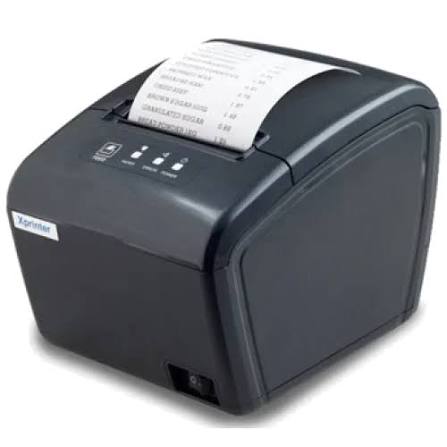
Thermal printers are widely used in retail, logistics, healthcare, manufacturing, and other industries where accurate and consistent printing is essential. From producing transaction receipts to printing shipping labels and product barcodes, these devices support important daily operations. Their performance directly affects workflow efficiency, making product quality and reliability important considerations for businesses.
Maintaining consistent performance requires careful planning, suitable components, accurate assembly, and thorough testing. A professional Thermal Printer Manufacturer typically follows a structured quality management process to ensure that its products meet technical requirements and perform reliably under their intended operating conditions. Understanding these practices can help businesses evaluate manufacturers and make better purchasing decisions.
1. Selecting High-Quality Raw Materials and Components
Product reliability begins with the materials and components used during manufacturing. Even a well-designed thermal printer may experience performance problems if its internal parts are inconsistent or unsuitable for the intended application.
Manufacturers carefully evaluate essential components such as thermal printheads, motors, control boards, sensors, rollers, and power supplies. Each component must meet specific technical requirements to support stable operation.
The printhead is particularly important because it generates the heat required to create images on thermal paper or transfer ribbons. Its quality influences printing clarity, resolution, and long-term performance.
Manufacturers may establish supplier qualification procedures and incoming inspection standards to identify defective or unsuitable components before production begins.
2. Implementing Strict Incoming Material Inspections
Before components enter the assembly process, they should undergo inspections to verify their quality and specifications. This helps prevent defective materials from affecting finished products.
Incoming quality control may involve checking component dimensions, electrical characteristics, physical appearance, and compatibility with approved product designs.
For electronic components, manufacturers may examine connections and electrical performance. Mechanical parts may be checked for dimensional accuracy, surface defects, and structural consistency.
A structured inspection process helps manufacturers maintain control over their supply chains and reduce the likelihood of production-related defects.
3. Using Precise Manufacturing and Assembly Processes
Accurate assembly is essential for producing thermal printers that operate consistently. Several mechanical and electronic components must work together, so incorrect positioning or loose connections can affect overall performance.
During assembly, production teams install the printhead, control board, paper-feeding mechanism, motors, sensors, and other internal components according to established specifications.
Important assembly considerations include:
- Correct positioning of the thermal printhead.
- Accurate alignment of paper-feeding rollers.
- Secure electronic connections.
- Proper installation of sensors and motors.
- Consistent fastening of internal and external components.
- Verification of mechanical movement.
Manufacturers may use standardized work instructions, specialized assembly equipment, and automated processes to reduce human error and maintain production consistency.
4. Conducting Print Quality Testing
Print quality is one of the most visible indicators of thermal printer performance. Businesses depend on clear receipts, readable labels, and accurate barcodes, making printing inspections an essential part of quality assurance.
Manufacturers evaluate different aspects of printing output to identify problems before products are approved for shipment.
Common print quality checks include:
Text clarity: Printed characters should be sharp and readable without unnecessary fading or distortion.
Image consistency: Graphics and symbols should appear uniform across the printing surface.
Barcode accuracy: Barcodes should maintain the required structure and remain readable by compatible scanning equipment.
Print alignment: Text and images should appear in the correct positions without unwanted shifting.
Density consistency: Printed output should maintain appropriate darkness across the document or label.
These tests help manufacturers identify printhead problems, alignment issues, and other defects that could affect customer operations.
5. Testing Printing Speed and Operational Performance
A thermal printer must maintain suitable printing speed while delivering consistent output. This is particularly important in environments where employees process numerous transactions or print large quantities of labels throughout the day.
Manufacturers test whether devices can operate according to their specified printing speeds and supported media configurations.
Performance testing may include repeated printing tasks, paper feeding assessments, and evaluations of device responsiveness.
It is also important to examine how the printer behaves during extended operation. Excessive heat, unstable paper movement, or inconsistent printing may indicate potential design or component issues.
Testing under appropriate operating conditions helps manufacturers determine whether the product meets its intended performance requirements.
6. Evaluating Mechanical Durability
Thermal printers contain moving components that experience repeated movement during normal operation. Paper-feeding rollers, motors, gears, and automatic cutters must function correctly to maintain consistent printing performance.
Mechanical durability testing helps identify weaknesses that could lead to premature wear or equipment failure.
Depending on the product category, manufacturers may evaluate:
- Repeated paper-feeding cycles.
- Automatic cutter performance.
- Cover opening and closing mechanisms.
- Roller movement and alignment.
- Button operation and structural stability.
- Performance during extended printing sessions.
The purpose of these tests is to assess whether the printer can withstand the workload and operating conditions for which it was designed.
7. Checking Electronic Stability and Connectivity
Modern thermal printers depend on electronic systems to process data, control printing operations, and communicate with connected devices. Problems with these systems can interrupt printing even when the mechanical components are functioning correctly.
Manufacturers therefore conduct electronic and connectivity tests to verify product functionality.
Common interfaces include USB, Ethernet, Bluetooth, and Wi-Fi. The available options depend on the printer model and its intended application.
Testing may examine connection stability, data transmission, device recognition, and communication with supported software platforms.
Manufacturers may also verify that the control board, power supply, sensors, and firmware operate together correctly. These checks help reduce connectivity-related problems after installation.
8. Performing Firmware and Software Compatibility Testing
Firmware controls important printer functions, including printhead operation, paper feeding, error detection, and communication between internal components.
Software compatibility is equally important because businesses use different operating systems, POS applications, inventory platforms, and printing software.
Manufacturers test their devices with supported drivers, printing commands, and communication protocols to confirm that printing tasks can be processed correctly.
These procedures may involve checking:
- Printer driver installation.
- Compatibility with supported operating systems.
- Printing command interpretation.
- Firmware functionality.
- Configuration settings.
- Error notifications and recovery processes.
Proper software testing helps prevent communication problems and improves the overall user experience.
9. Conducting Environmental and Stability Tests
Thermal printers may operate in different environments, including retail counters, warehouses, transportation facilities, and manufacturing plants. Environmental conditions can influence product performance.
Manufacturers may conduct tests to evaluate how printers respond to temperature changes, humidity, dust exposure, and other relevant conditions.
The testing requirements depend on the intended application and product specifications. For example, portable devices used in field operations may require different environmental evaluations from printers installed in controlled office environments.
Stability testing can also help identify overheating, unexpected shutdowns, and inconsistent operation during extended use.
10. Applying Statistical Quality Control
Quality assurance involves more than checking individual products. Manufacturers also need to monitor production consistency across different batches and identify recurring problems.
Statistical quality control methods can help production teams analyze inspection results and identify variations in manufacturing processes.
For example, manufacturers may track defect rates, component rejection levels, printing performance measurements, and assembly-related issues.
Production data can reveal patterns that require corrective action. If a particular component repeatedly fails inspection, the manufacturer can investigate the supplier, production method, or design specification responsible for the problem.
Using measurable quality indicators supports more informed manufacturing decisions.
11. Following Relevant Safety and Compliance Requirements
Thermal printers are electronic products, so manufacturers must consider applicable safety and regulatory requirements in their target markets.
Depending on the destination country and product configuration, requirements may involve electrical safety, electromagnetic compatibility, and environmental regulations.
A responsible manufacturer should understand which standards apply to its products and maintain relevant testing records and compliance documentation.
Businesses purchasing printers internationally should verify that the supplied models meet the requirements of their intended markets.
This is especially important for companies distributing equipment across multiple countries, where regulatory requirements may differ.
12. Inspecting Finished Products Before Packaging
Final inspection provides an additional opportunity to identify problems before completed printers leave the production facility.
At this stage, quality control teams may examine product appearance, accessories, labeling, basic functionality, and packaging condition.
A final functional test may confirm that the printer powers on correctly, recognizes printing materials, communicates with connected devices, and produces acceptable output.
Manufacturers may also verify serial numbers, product identification labels, and included accessories to ensure that orders match the approved specifications.
This process helps reduce shipping errors and improves consistency between production batches.
13. Maintaining Supplier Quality Management
A manufacturer’s product quality also depends on the reliability of its component suppliers. Since thermal printers contain electronic, mechanical, and structural parts, inconsistent materials can affect production results.
Supplier quality management helps manufacturers maintain suitable standards throughout the supply chain.
Common practices include:
- Evaluating suppliers before establishing partnerships.
- Defining technical specifications for components.
- Reviewing supplier inspection reports.
- Monitoring component defect rates.
- Conducting periodic supplier assessments.
- Maintaining alternative sourcing arrangements when appropriate.
Strong supplier relationships can improve material consistency and reduce unexpected production disruptions.
14. Using Customer Feedback for Continuous Improvement
Quality management should continue after products reach customers. Feedback from actual operating environments can reveal issues that may not appear during standard factory testing.
Manufacturers can collect information about printing performance, mechanical durability, connectivity, installation difficulties, and maintenance requirements.
Engineering teams can use this information to identify opportunities for product improvements.
For example, recurring feedback about paper feeding may encourage adjustments to roller design. Reports of software compatibility problems may lead to firmware updates or improved driver support.
A continuous improvement approach helps manufacturers respond to customer expectations and changing industry requirements.
15. Providing Technical Support and Maintenance Guidance
Even well-tested thermal printers require appropriate installation, maintenance, and occasional troubleshooting. Manufacturer support can therefore contribute to product reliability throughout its operating life.
Useful support services may include installation instructions, user manuals, driver downloads, firmware updates, warranty assistance, and replacement component availability.
Manufacturers should also provide guidance on routine maintenance, such as cleaning printheads, checking paper paths, and using compatible printing materials.
Proper maintenance can reduce unnecessary wear and help businesses maintain consistent output quality.
Conclusion
Thermal printer manufacturers ensure product quality and reliability through a combination of careful component selection, accurate assembly, comprehensive testing, supplier management, and continuous improvement. Each stage helps identify potential problems and maintain consistent performance before products reach customers.
For businesses evaluating manufacturing partners, understanding these quality assurance practices provides valuable insight into production capabilities and product dependability. Examining inspection procedures, testing methods, compliance documentation, and after-sales support can help companies select equipment that meets their operational requirements.
Ultimately, reliable thermal printing equipment is the result of consistent manufacturing standards and ongoing attention to performance. Manufacturers that prioritize these areas are better positioned to deliver products capable of supporting the demanding needs of modern businesses.