A mosque wash area must accommodate a steady flow of worshippers while maintaining an environment that is orderly, comfortable, and straightforward to maintain. Unlike a private bathroom, a communal ablution facility may experience concentrated use before congregational prayers, especially during Friday services and religious occasions. Choosing suitable washing fixtures therefore requires careful consideration of capacity, user movement, material selection, and building services.
When comparing products for a mosque project, a Muslim basin should be assessed according to its intended application, available dimensions, and technical characteristics. The selection process should involve architects, plumbing contractors, and facility managers so that the chosen installation addresses both construction requirements and the daily needs of the congregation.
Start by Assessing Congregational Demand
The number of washing positions required depends on the mosque’s expected attendance and usage patterns.
A small neighborhood mosque may operate effectively with a modest number of stations. A larger mosque serving a substantial congregation may need a coordinated arrangement that accommodates several users simultaneously.
Project planners should examine peak attendance rather than relying only on average daily usage.
This assessment helps establish the required basin capacity, room dimensions, and circulation routes.
Examine the Different Basin Configurations
Mosque wash areas can accommodate several types of washing installations.
Individual basins: Separate units provide flexibility in positioning and can be suitable for smaller facilities or buildings with existing plumbing restrictions.
Multi-user installations: Coordinated arrangements can support several worshippers at once. Their dimensions and spacing should be reviewed carefully to avoid overcrowding.
Custom configurations: Some projects have unusual room dimensions or architectural constraints. In these situations, customized solutions may be worth discussing with manufacturers.
The most appropriate arrangement depends on the available space and intended number of users.
Evaluate Basin Dimensions and Practical Features
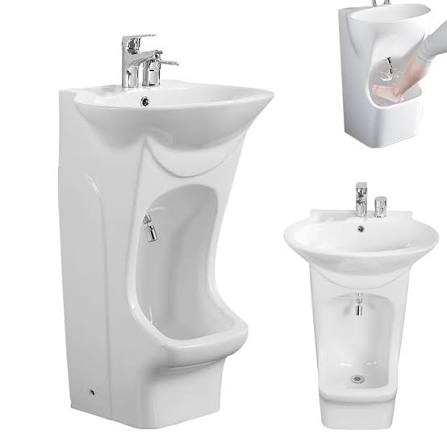
A mosque basin should accommodate the washing activities associated with Wudu.
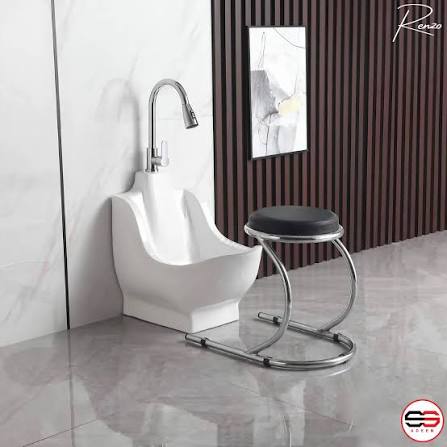
Check its height, depth, width, and faucet positioning. The design should provide sufficient space for foot washing where required, without forcing users into uncomfortable positions.
Seating may be beneficial for elderly worshippers and individuals who prefer not to wash their feet while standing.
Also examine the surrounding clearance. Users should be able to approach and leave the station without obstructing neighboring worshippers.
Compare Material Characteristics
The material affects the basin’s appearance, cleaning requirements, and installation arrangements.
Ceramic, stainless steel, and solid-surface products are among the options that may be considered, depending on the project.
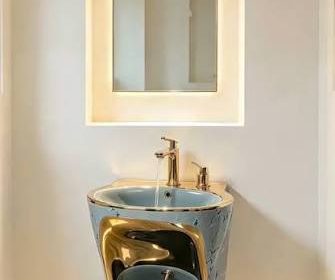
Solid-surface materials can offer opportunities for contemporary shapes and coordinated finishes. However, the precise characteristics vary between formulations and manufacturers.
Before making a purchase, request technical documentation covering material composition, recommended applications, surface care, and installation instructions.
Physical samples can help the mosque committee compare finishes with existing tiles and wall materials.
Plan Water Supply and Wastewater Management
A busy mosque may have several faucets operating simultaneously.
The plumbing system should therefore be assessed for adequate water supply and suitable drainage capacity. Contractors should verify pipe sizes, pressure requirements, and connection positions before installation.
The floor needs suitable waterproofing and gradients that direct water toward drainage outlets.
Standing water should be avoided around entrances and washing stations because it can create slip hazards.
Consider Accessibility and Facility Safety
Mosque facilities serve people of different ages and physical abilities.
Provide clear circulation routes, suitable washing heights, and accessible arrangements where required. Stable seating and conveniently positioned controls can make the facility more welcoming.
Choose flooring appropriate for wet conditions and ensure that lighting is sufficient around every washing position.
Local building and accessibility regulations should guide the final design.
Investigate Maintenance and Procurement Requirements
Before ordering, obtain a written quotation and confirm the product dimensions, mounting arrangements, delivery conditions, and warranty coverage.
Facility managers should understand the recommended cleaning procedures and availability of replacement components.
The basin should also allow practical access to plumbing connections for inspections and repairs.
Making the Right Mosque Specification
Choosing a Muslim basin for a mosque requires balancing congregation capacity with comfort, safety, and architectural quality. Careful planning helps avoid congestion, unsuitable installations, and unnecessary construction changes. By reviewing technical information and involving the relevant project professionals, mosque committees can select washing fixtures that serve worshippers effectively and remain manageable throughout the building’s operation.