Maintaining clean and properly balanced swimming pool water requires regular testing and an effective sanitation routine. One challenge for outdoor pool owners is that sunlight can gradually break down free chlorine, reducing its ability to control microorganisms. When chlorine levels decline too quickly, maintaining consistent water quality may become more difficult and require additional chemical adjustments.
A Pool Conditioner, commonly formulated with cyanuric acid, helps reduce chlorine loss caused by ultraviolet (UV) radiation. It acts as a stabilizer that protects a portion of the available chlorine from rapid sunlight degradation. Understanding how conditioner works, which cyanuric acid levels are appropriate, and how stabilizer interacts with other pool chemicals can help operators make informed decisions about water treatment.
What Is a Pool Conditioner?
Pool conditioner is a chemical product used to stabilize chlorine in swimming pool water. Its primary function is to reduce the rate at which UV radiation breaks down free chlorine, particularly in outdoor pools exposed to direct sunlight.
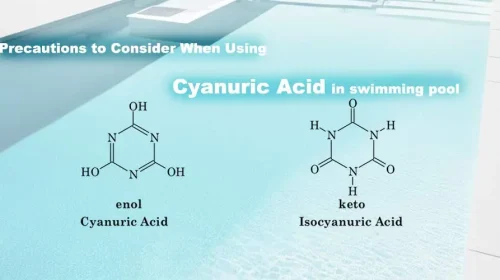
Cyanuric acid is the most common active ingredient in conventional pool conditioners. When dissolved in water, it forms a reversible association with free chlorine. This helps protect some chlorine from immediate UV degradation while allowing it to become available for disinfection.
A conditioner does not replace chlorine or independently sanitize pool water. Instead, it supports the performance of a chlorine-based sanitation program by helping maintain chlorine availability for longer under sunlight exposure.
Why Cyanuric Acid Levels Matter
Cyanuric acid concentration is an important measurement in outdoor pool management. Too little stabilizer may provide insufficient protection against sunlight, while excessive concentrations can make chlorine management more difficult.
The relationship between cyanuric acid and free chlorine is particularly important. As stabilizer concentration increases, a greater proportion of chlorine becomes associated with cyanuric acid. This can reduce the amount of chlorine immediately available for disinfection.
For this reason, pool operators should not assume that adding more conditioner always improves water quality. The objective is to maintain a suitable stabilizer concentration based on pool conditions, chlorine levels, and applicable health regulations.
How Pool Conditioner Protects Chlorine
Sunlight contains ultraviolet radiation that can accelerate the breakdown of free chlorine. This process is especially relevant in outdoor pools that receive several hours of direct sunlight each day.
Cyanuric acid helps reduce this effect through a reversible chemical interaction with chlorine. The association provides a degree of protection against UV radiation while allowing chlorine to become available as required.
This process can help:
- Reduce chlorine degradation caused by sunlight.
- Support more consistent chlorine availability.
- Limit unnecessary chlorine replacement caused by UV exposure.
- Improve the predictability of outdoor pool maintenance.
However, conditioner does not prevent chlorine consumption caused by swimmers, organic contaminants, or other chemical reactions. Routine testing and appropriate chlorine dosing remain essential.
Factors That Influence the Appropriate Cyanuric Acid Level
The amount of conditioner required varies according to the pool’s environment and sanitation system. Several factors should be considered before adding more stabilizer.
1. Sunlight Exposure
Pools exposed to strong sunlight throughout the day may experience greater UV-related chlorine loss than shaded pools. Sunlight intensity and daily exposure time can therefore influence stabilizer requirements.
2. Existing Cyanuric Acid Concentration
The current stabilizer level should always be tested before treatment. Cyanuric acid can accumulate because it does not readily evaporate or break down under normal pool conditions.
Adding more without checking the existing concentration can create unnecessary chemical buildup.
3. Type of Chlorine Product
Some chlorine products already contain cyanuric acid. Dichlor and trichlor, for example, contribute stabilizer during regular use.
Pool operators should account for these products when managing total cyanuric acid concentration. Otherwise, repeated additions may gradually increase stabilizer levels beyond the intended range.
4. Pool Usage and Water Replacement
Swimmer activity increases the introduction of organic contaminants, which can raise chlorine demand. Water replacement through draining, refilling, or backwashing can also change stabilizer concentration.
These factors should be included in regular water-quality assessments.
5. Pool Type and Local Requirements
Outdoor and indoor pools have different exposure conditions. Indoor pools generally have less need for cyanuric acid because they receive limited direct sunlight. Some facilities or jurisdictions may also have specific restrictions on stabilizer use.
Operators should follow applicable pool regulations and professional water-treatment guidance.
Understanding the Relationship Between Conditioner and Other Pool Chemicals
Cyanuric acid is only one part of overall pool chemistry. Maintaining suitable water quality requires monitoring several interconnected measurements.
| Water parameter | Main function |
|---|---|
| Free chlorine | Indicates chlorine available for disinfection |
| Cyanuric acid | Measures chlorine stabilizer concentration |
| pH | Influences chlorine effectiveness and swimmer comfort |
| Total alkalinity | Helps resist sudden pH changes |
| Calcium hardness | Helps manage scaling and corrosive water conditions |
Free chlorine should be interpreted in relation to cyanuric acid concentration. Maintaining an appropriate pH is also important because conditioner does not correct poor water balance or replace routine sanitation.
How to Choose a Suitable Pool Conditioner
Product selection should consider chemical composition, consistency, application requirements, and supplier reliability. These factors are important for residential pool owners as well as commercial buyers.
Product Composition and Purity
Review the product specifications to confirm the active ingredient and stated concentration. Clear technical information helps buyers assess whether a product is appropriate for their intended application.
Physical Form and Handling
Conditioners may be supplied in granular or other solid formats. Buyers should consider how the product is measured, stored, and applied. Different formulations may have different dissolution characteristics and handling instructions.
Packaging Quality
Suitable packaging helps protect the product from moisture and contamination during transport and storage. Packaging size should also match purchasing volume and storage capacity.
Technical Documentation
Reliable product documentation should include relevant specifications, application guidance, and safety information. Commercial buyers may also require batch-related quality records.
Supplier Reliability
Consistent availability and dependable product quality are important for businesses managing multiple pools or distributing water-treatment chemicals. Technical support can also help buyers address product-handling and application questions.
Best Practices for Managing Cyanuric Acid Levels
An effective conditioner program relies on testing rather than guesswork. The following practices help maintain better control over stabilizer concentration.
- Test before treatment: Measure cyanuric acid and free chlorine before adding conditioner.
- Calculate pool volume accurately: Use a reliable estimate when determining the amount of product required.
- Review chlorine formulations: Account for stabilizer already contributed by dichlor or trichlor products.
- Follow product instructions: Use the recommended application method and dosage guidance.
- Maintain water circulation: Follow manufacturer instructions to support appropriate distribution.
- Monitor pH and chlorine: Evaluate stabilizer alongside other important water-quality measurements.
- Keep treatment records: Document test results and chemical additions to identify changes over time.
If cyanuric acid becomes excessive, partial water replacement may be necessary. The appropriate approach should follow local requirements and professional guidance.
Common Mistakes in Pool Conditioner Use
Even a suitable product can cause problems when it is used without proper testing. Common mistakes include:
- Adding conditioner without measuring existing levels: This can cause unnecessary cyanuric acid accumulation.
- Assuming higher concentrations provide better protection: Excessive stabilizer can complicate chlorine management.
- Ignoring stabilized chlorine products: Repeated use of certain chlorine formulations can increase cyanuric acid levels.
- Neglecting pH management: Conditioner does not replace routine water balancing.
- Using inaccurate pool-volume estimates: Incorrect calculations may lead to unsuitable dosage.
- Expecting conditioner to prevent every type of chlorine loss: It mainly addresses UV degradation, not chlorine consumption from contaminants.
Avoiding these mistakes helps maintain a more consistent sanitation program.
Safe Storage and Handling
Pool conditioner should be stored in its original, clearly labeled packaging in a cool, dry, well-ventilated location. Protect it from moisture, excessive heat, and contact with incompatible chemicals.
Always follow the manufacturer’s instructions and safety data sheet. Use the recommended protective equipment, avoid mixing pool chemicals unless an approved procedure specifically permits it, and keep storage areas secure from unauthorized access.
Conclusion
Pool conditioner plays an important role in outdoor swimming pool maintenance by helping reduce chlorine degradation caused by sunlight. Its main ingredient, cyanuric acid, supports chlorine protection, but its concentration must be carefully controlled to maintain effective disinfection.
By monitoring stabilizer and free chlorine levels, considering the contribution of existing chlorine products, and maintaining balanced water chemistry, pool operators can make better treatment decisions. Careful product selection, accurate testing, and consistent maintenance help support reliable pool sanitation throughout the swimming season.