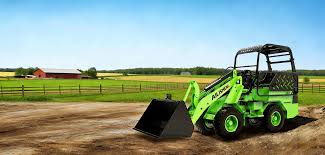
Excavation machinery has evolved significantly as construction businesses seek equipment that can perform demanding tasks while adapting to changing work environments. Developments in machine design, controls, power systems, and attachments continue to influence how contractors approach ground preparation, trenching, landscaping, and site development. Looking ahead, the next generation of excavation equipment is likely to be shaped by a combination of productivity expectations, technology development, environmental considerations, and practical site requirements.
The growing interest in electric diggers is one example of this evolution. Battery-powered excavators offer an alternative to conventional diesel machinery, creating opportunities for contractors to explore different operating arrangements. Their future role will depend on improvements in performance, charging, durability, service support, and how effectively the technology meets the demands of real construction projects.
The Evolution of Excavation Power Systems
Traditional excavators rely on internal combustion engines to provide power for travel and hydraulic operation. These systems have become established across the construction industry, supported by extensive maintenance networks, fuel infrastructure, and operator familiarity.
Electric equipment introduces a different powertrain arrangement. Battery systems store energy, while electric motors and associated components support the machine’s operation according to its design.
This change may influence noise, direct exhaust emissions, maintenance requirements, and energy management. However, the machine must still deliver the digging performance, stability, hydraulic capability, and reliability expected from construction equipment.
Developments in Battery Technology
Battery technology is an important area of ongoing development. Improvements in energy storage, charging systems, battery management, and thermal control may influence future machinery design.
For construction equipment, battery performance must be considered in relation to workload. Excavation can involve demanding hydraulic operation, travel, lifting, and repeated repositioning. These activities may consume energy at different rates.
Contractors will continue to need realistic operating-time information and charging arrangements that support their projects. Future improvements may provide additional flexibility, but businesses should evaluate equipment using confirmed specifications rather than predictions.
Charging Infrastructure and Energy Management
The wider adoption of electric machinery depends partly on practical charging arrangements. Construction companies may need to consider depot infrastructure, electrical supply capacity, charger compatibility, charging schedules, and the locations where equipment is deployed.
Charging requirements can influence how machinery is allocated to projects. Equipment used at a fixed location may be easier to charge than machines that move between several temporary sites.
Future developments in charging technology and infrastructure may improve flexibility, but contractors will still need to plan energy use according to their operating conditions. Reliable charging access remains an important factor in equipment availability.
Potential Changes in Construction Environments
Construction sites may increasingly involve work near occupied buildings, urban developments, commercial facilities, and locations where environmental or noise considerations influence equipment choice.
Electric powertrains generally avoid continuous diesel engine noise and do not produce diesel exhaust directly during operation. These characteristics may make electric machinery useful for selected applications in sensitive environments.
However, excavation still generates noise from hydraulic systems, tracks, attachments, and ground contact. Dust and other hazards also remain. Equipment selection must continue to consider the complete working environment.
Technology and Operator Experience
Future excavation machinery may incorporate further developments in controls, monitoring, diagnostics, operator assistance, and equipment management. These features may help businesses track machine condition, operating hours, energy use, and maintenance requirements.
Technology should be evaluated according to its practical value. Contractors need systems that are reliable, understandable, and supported by the supplier.
Operator experience remains important even as machinery becomes more advanced. Training, familiarity with controls, understanding operating limits, and consistent safety procedures are essential for effective use.
Maintenance and Equipment Durability
The future of electric excavation will also depend on maintenance arrangements and long-term durability. Battery systems, electrical components, hydraulic equipment, tracks, attachments, and cooling systems must perform reliably in demanding environments.
Manufacturers and suppliers need to provide clear service procedures, warranty coverage, parts availability, and technical support. Contractors should understand the maintenance requirements before purchasing equipment.
The machine’s lifecycle performance will influence its financial value. Businesses should consider expected utilisation, servicing, repairs, battery condition, and resale potential when comparing equipment.
Financial Evaluation and Adoption
Electric equipment may offer opportunities to reduce certain operating expenses, although the outcome depends on electricity costs, workload, charging infrastructure, maintenance, and purchase price.
Contractors should compare total ownership costs rather than focusing on a single expense. Trials, demonstrations, and practical operating records can help establish whether a machine meets the company’s requirements.
A gradual introduction may be appropriate for businesses that want to assess the technology before expanding its role within the fleet.
A Future Built on Practical Performance
The next generation of excavation machinery will be shaped by technological development and the changing needs of construction businesses. Electric diggers represent one direction in this evolution, offering potential advantages in particular environments while introducing new considerations involving energy, charging, and battery management.
Their future success will depend on practical performance, reliability, cost, and the ability to support different construction applications. Contractors who evaluate new machinery carefully and base decisions on operational evidence will be better positioned to adapt as excavation technology continues to develop.