Industrial fluid systems require dependable connections to transfer liquids and gases between equipment, hoses, and supply lines. Whether used in hydraulic machinery, pneumatic tools, manufacturing equipment, or fluid processing operations, connection components influence system efficiency, safety, and maintenance requirements. Traditional connections can take time to assemble and may require tools whenever equipment needs to be disconnected. Quick-connect technology offers a practical alternative for applications that require convenient and repeatable connections.
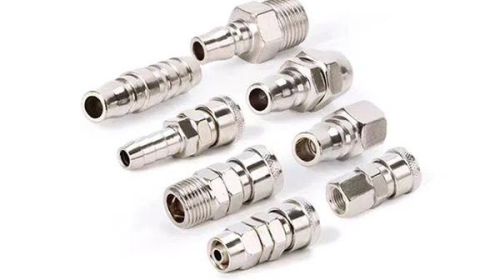
A Quick Coupling is designed to connect and disconnect compatible fluid lines with minimal effort while maintaining a secure connection during operation. Available in different configurations, materials, and pressure ratings, these components serve a wide range of industrial requirements. Understanding their designs, applications, and selection factors helps businesses choose products that deliver reliable performance under actual working conditions.
1. What Is a Quick Coupling?
A quick coupling is a mechanical connection component that allows two fluid-carrying sections to be joined or separated without repeatedly dismantling conventional threaded connections. Most designs consist of two mating halves that engage through a locking mechanism.
Depending on the configuration, internal valves may automatically open when the coupling is connected and close when it is separated. This helps control fluid movement and can reduce leakage during disconnection.
Quick couplings are commonly used where equipment requires frequent attachment changes, routine maintenance, or flexible fluid connections. Their design can also reduce the time needed for installation and servicing.
2. Common Quick Coupling Designs
Different coupling designs are developed to meet specific pressure, flow, and operating requirements. Understanding their characteristics makes it easier to identify the right option for an industrial system.
Push-to-Connect Couplings
Push-to-connect designs allow compatible components to engage through a straightforward insertion mechanism. They are useful in applications where operators need to make frequent connections and value quick handling.
Ball-Type Couplings
These couplings use internal locking balls or similar mechanisms to secure the mating halves. Their pressure capacity, flow characteristics, and connection requirements depend on the specific product design.
Flat-Face Couplings
Flat-face couplings feature smooth mating surfaces that help minimize fluid spillage during connection and disconnection. Their external surfaces are also easier to clean, making them useful in environments where contamination control is important.
Screw-to-Connect Couplings
Screw-to-connect designs use threaded engagement to hold the connection halves together. They can be suitable for demanding applications where secure mechanical retention is required, provided the product is correctly specified and installed.
Non-Spill Couplings
Certain coupling designs incorporate valve arrangements intended to reduce fluid loss when disconnected. These are useful in applications where controlling spills and limiting environmental contamination are priorities.
3. Industrial Applications of Quick Couplings
Quick couplings are used across multiple industries because they simplify the connection of compatible fluid lines and equipment accessories.
Hydraulic Equipment
Construction machinery, agricultural equipment, lifting systems, and industrial power units use hydraulic couplings to connect hoses, cylinders, and attachments. Suitable designs help make servicing and equipment changes more convenient.
Pneumatic Systems
Compressed-air installations use quick connection components to attach tools, hoses, and accessories. Correct pressure ratings and compatible connection profiles are essential for reliable operation.
Manufacturing Facilities
Production lines often require fluid connections for machinery, cooling circuits, and specialized equipment. Quick couplings can simplify maintenance and support more efficient equipment reconfiguration.
Automotive and Transportation
Vehicle service equipment and certain mobile systems use quick-connect solutions to support fluid handling and component replacement.
General Fluid Transfer
Some couplings are designed for water, oil, coolants, and other industrial fluids. Material and seal compatibility must be confirmed before selecting a product for a particular medium.
4. Benefits of Using Quick Couplings in Industrial Systems
When correctly selected, quick couplings can improve several aspects of equipment operation.
Faster connections: Their engagement mechanisms can reduce the time needed to attach and disconnect compatible components.
Simplified maintenance: Technicians can separate selected sections of a system to inspect, repair, or replace equipment without unnecessarily dismantling larger assemblies.
Reduced fluid loss: Couplings with suitable internal valve and sealing arrangements can help minimize leakage during disconnection.
Greater flexibility: Different configurations allow businesses to accommodate changing equipment requirements and attachment setups.
Improved handling: Convenient connection mechanisms can reduce manual effort during routine equipment changes.
These benefits depend on product specifications, installation quality, and correct operating procedures.
5. Important Factors When Selecting a Quick Coupling
Choosing a coupling requires more than matching its external dimensions to an existing connection. Several technical factors determine whether a product is suitable for the application.
Working Pressure
Check the maximum allowable working pressure and confirm that the coupling can withstand the system’s normal operating conditions and foreseeable pressure surges.
Flow Capacity
The internal passage and valve arrangement influence the amount of fluid that can pass through the connection. Select a coupling that supports the required flow rate without creating excessive pressure drop.
Material Construction
Steel, stainless steel, brass, and other materials offer different combinations of strength and corrosion resistance. The material should suit the operating environment and fluid characteristics.
Seal Compatibility
Seals must be compatible with the transferred medium and expected temperature range. Incompatible materials may deteriorate and lead to leakage.
Connection Frequency
Equipment that is disconnected regularly may require a design intended for repeated connection cycles. Consider the durability of the locking mechanism and sealing components.
Environmental Conditions
Dust, moisture, vibration, chemicals, and mechanical impact can affect coupling performance. Choose a construction and protective arrangement suitable for the installation environment.
6. Understanding Connection Compatibility
A coupling must match the connection profile and technical requirements of the equipment. Products that look similar are not necessarily interchangeable.
Before purchasing, verify:
- Coupling profile and applicable dimensional standard.
- Thread type, size, and configuration.
- Hose or pipe connection dimensions.
- Working pressure and flow requirements.
- Fluid and seal compatibility.
- Manufacturer-approved interchangeability.
Using incompatible coupling halves can result in poor engagement, leakage, or unsafe operation. Always consult technical documentation rather than relying on appearance alone.
7. Installation Procedures for Reliable Connections
Correct installation helps ensure that a coupling performs as intended. Even a high-quality product can fail prematurely if its mating surfaces are contaminated or its locking mechanism is not fully engaged.
Follow these general steps:
- Confirm that both coupling halves are compatible.
- Inspect the mating surfaces and seals for damage.
- Clean away dirt, dust, and other contaminants.
- Align the components according to manufacturer instructions.
- Engage the coupling fully and check the locking mechanism.
- Carry out appropriate leak checks before normal operation.
For pressurized hydraulic systems, isolate the equipment and relieve trapped pressure where required before attempting disconnection. Never force a coupling that does not engage correctly.
8. Maintenance Practices That Extend Service Life
Routine inspection helps identify wear and damage before they affect system performance. Maintenance requirements vary by coupling design and operating environment, but several practices are broadly useful.
- Inspect coupling bodies for corrosion, cracks, and deformation.
- Check seals for wear, cuts, and deterioration.
- Examine locking components for smooth and secure operation.
- Clean mating surfaces before every connection.
- Use protective caps and plugs when couplings are disconnected.
- Replace damaged components according to manufacturer guidance.
- Investigate recurring leakage instead of repeatedly reconnecting faulty parts.
Keeping connection points clean is especially important in hydraulic systems, where contamination can damage pumps, valves, and other sensitive components.
9. Common Selection and Operating Mistakes
Avoiding basic mistakes can improve connection reliability and reduce maintenance problems.
Some common issues include:
- Selecting products based only on size or purchase price.
- Ignoring pressure surges and temperature limitations.
- Using incompatible seals or materials.
- Assuming different coupling profiles are interchangeable.
- Overlooking pressure drop and flow capacity.
- Connecting contaminated mating surfaces.
- Neglecting inspection of worn locking mechanisms.
- Disconnecting lines without following pressure-relief procedures.
A structured selection process and proper operator training help prevent many of these problems.
10. Evaluating Suppliers and Product Quality
The reliability of an industrial coupling depends on manufacturing quality, material selection, dimensional accuracy, and testing procedures. Choosing a supplier that provides clear technical information makes product evaluation easier.
When comparing suppliers, review:
- Detailed product specifications.
- Available pressure and flow ratings.
- Material and seal information.
- Relevant testing and certification details.
- Availability of replacement parts.
- Technical support for application selection.
Reliable documentation helps ensure that the chosen coupling matches the system’s requirements and can be maintained appropriately throughout its service life.
Conclusion
Quick couplings play an important role in modern industrial fluid systems by making connections more convenient, supporting efficient maintenance, and providing flexibility across different applications. Their performance depends on selecting the right design, material, pressure rating, sealing arrangement, and connection profile.
By evaluating operating conditions and following correct installation and inspection procedures, businesses can reduce leakage risks, avoid compatibility problems, and maintain dependable equipment performance. A carefully selected coupling is a valuable part of an efficient and reliable fluid transfer system.