Selecting the right packaging equipment is an important decision for manufacturers looking to improve production efficiency and prepare finished goods for distribution. As businesses expand their operations, manual packaging processes may become difficult to manage due to increasing order volumes, labor requirements, and demands for consistent product quality. An appropriate automation solution can help streamline final packaging activities while supporting long-term operational goals.
Choosing End of Line Packaging Automation requires more than comparing machine prices or production speeds. Businesses must consider product characteristics, packaging formats, factory layout, equipment compatibility, and future capacity requirements. A well-planned system should connect individual packaging operations into a coordinated process that meets the specific needs of the manufacturing facility.
1. Understand Your Production Requirements
The first step is to evaluate the existing production process and identify the activities that need automation.
Some manufacturers may only need automatic carton sealing, while others require a complete system covering case forming, product packing, labeling, palletizing, and stretch wrapping.
Before selecting equipment, review the current packaging workflow and identify areas where manual handling creates delays or operational difficulties.
Important questions include:
- How many products need to be packaged per hour?
- How many cartons are processed during each production shift?
- Which packaging activities currently require manual labor?
- Where do production bottlenecks occur?
- Are there seasonal changes in packaging demand?
Understanding these requirements helps businesses avoid purchasing equipment that is either unsuitable or unnecessarily complex.
2. Evaluate Product Characteristics
Product characteristics have a direct influence on packaging equipment selection.
Products differ in size, weight, shape, fragility, and handling requirements. A machine designed for lightweight consumer goods may not be suitable for heavy industrial products or fragile containers.
Manufacturers should evaluate whether products require special positioning, protective inserts, controlled movement, or specific loading arrangements.
For example, bottles may require organized grouping before entering shipping cartons, while irregularly shaped products may need customized gripping or handling equipment.
The selected system should accommodate the product’s physical properties without creating unnecessary handling risks or packaging defects.
3. Identify the Required Packaging Operations
Different businesses require different combinations of end-of-line equipment.
A complete packaging system may include several machines connected through conveyors and automated controls.
Carton Forming
Automatic case erectors open flat cardboard blanks, fold carton flaps, and prepare boxes for product loading.
Case Packing
Case packing machines arrange finished products inside shipping cartons according to predefined patterns.
Carton Sealing
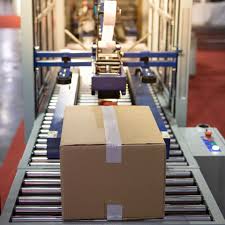
Automatic sealing machines close cartons using adhesive tape or hot-melt glue, depending on packaging specifications.
Labeling and Coding
Labeling and coding equipment applies shipping information, barcodes, batch numbers, and other identification details.
Palletizing
Automatic or robotic palletizers arrange cartons onto pallets in organized stacking patterns.
Stretch Wrapping
Stretch wrapping machines apply film around pallet loads to help stabilize products during storage and transportation.
Businesses should select the operations that address their actual packaging needs rather than automatically investing in every available machine.
4. Determine the Required Production Speed
Production speed is one of the most important factors when comparing packaging automation solutions.
A packaging line should process products at a rate that supports the output of upstream manufacturing equipment.
If a case packing machine operates more slowly than the production line, products may accumulate before the packaging station. Similarly, a palletizer with insufficient capacity may interrupt the movement of completed cartons.
Manufacturers should calculate the required throughput based on:
- Average production output per hour.
- Peak production demand.
- Number of operating shifts.
- Product changeover frequency.
- Expected future production growth.
It is also important to consider the performance of the complete packaging line rather than focusing only on the rated speed of an individual machine.
5. Check Equipment Compatibility
A packaging line usually consists of multiple machines that must operate together.
Equipment compatibility affects product movement, production timing, communication, and overall system performance.
Before selecting machinery, manufacturers should check conveyor heights, transfer arrangements, carton dimensions, operating speeds, control interfaces, and available connections.
For example, an automatic case packer must work effectively with the upstream product conveyor and downstream carton sealing equipment.
Programmable logic controllers, sensors, and industrial communication systems can help coordinate different machines.
Choosing compatible equipment reduces integration difficulties and helps create a more reliable packaging workflow.
6. Consider Available Factory Space and Layout
Factory layout can significantly influence the type of packaging automation solution a business can install.
Some facilities have sufficient floor space for conventional packaging lines, while others operate in restricted production areas.
Manufacturers should evaluate:
- Available floor space.
- Conveyor routes and product movement.
- Machine loading and unloading areas.
- Operator access.
- Maintenance clearance.
- Electrical and compressed air connections.
- Emergency exits and safety zones.
A detailed layout plan helps determine where each machine should be positioned.
It also reduces the possibility of unnecessary product movement and difficult equipment access after installation.
7. Evaluate Automation Levels
Not every packaging operation needs the same degree of automation.
Some businesses may benefit from semi-automatic equipment, while high-volume manufacturers may require fully integrated systems.
Manual packaging relies primarily on employees to complete individual activities.
Semi-automatic packaging uses machinery for selected operations but still requires regular operator involvement.
Fully automatic packaging connects multiple machines to perform final packaging operations with limited direct intervention.
The appropriate automation level depends on production volume, labor availability, investment capacity, and product requirements.
A gradual automation strategy may be suitable for businesses that want to improve specific operations before upgrading the entire packaging line.
8. Compare Initial Investment and Operating Costs
The purchase price is only one part of the total cost of an automation solution.
Businesses should evaluate the complete financial impact of installing and operating the equipment.
Potential costs include:
- Machinery purchase and installation.
- Conveyor systems and integration.
- Electrical and control components.
- Operator training.
- Spare parts and maintenance.
- Energy and compressed air consumption.
- Software upgrades and technical support.
These expenses should be compared with expected operational benefits, such as reduced manual handling, improved throughput, lower packaging waste, and fewer production interruptions.
A realistic return-on-investment evaluation helps manufacturers understand whether the proposed system is financially suitable.
9. Prioritize Equipment Reliability and Maintenance
Packaging equipment must operate consistently to support production schedules.
Frequent machine breakdowns can interrupt packaging activities and create delays throughout the manufacturing facility.
When evaluating suppliers and machinery, review the equipment’s construction, component quality, maintenance requirements, and service arrangements.
Manufacturers should also ask about:
- Recommended preventive maintenance schedules.
- Availability of replacement parts.
- Access to technical support.
- Troubleshooting procedures.
- Equipment warranty conditions.
- Training for maintenance personnel.
Machines designed for accessible servicing can make routine maintenance easier and help reduce unnecessary downtime.
10. Review Safety Features
Safety should be considered throughout the equipment selection and installation process.
Automated packaging machines contain moving components, conveyors, robotic arms, and mechanical handling systems. These areas must be properly designed to reduce potential hazards.
Important safety features may include:
- Emergency stop buttons.
- Protective guards and interlocks.
- Light curtains and safety sensors.
- Clearly identified operating zones.
- Safe access for maintenance.
- Appropriate warning indicators.
Employees should receive suitable training before operating or servicing automated equipment.
A safety-focused approach helps protect workers while supporting reliable production operations.
11. Consider Flexibility for Different Products and Packaging Formats
Manufacturers that handle multiple products may need equipment capable of accommodating different packaging requirements.
For example, a facility may process several carton sizes or different product configurations throughout the day.
Equipment with adjustable guides, programmable settings, flexible handling tools, and recipe-based controls can simplify product changeovers.
Robotic packaging systems may also offer flexibility when manufacturers need to handle different product arrangements.
Before purchasing machinery, businesses should confirm which product sizes and packaging formats can be supported and how much time is required to change between them.
12. Examine Integration with Existing Production Systems
A new packaging solution should fit into the manufacturer’s wider production environment.
It may need to communicate with upstream filling, labeling, or inspection equipment, as well as downstream warehouse and logistics systems.
Integration with manufacturing execution systems and warehouse management software can support production monitoring, product identification, and inventory tracking.
For example, automated labeling equipment may receive product information from a production database, while pallet identification systems can provide information for warehouse operations.
Manufacturers should discuss communication requirements and integration capabilities with equipment suppliers before finalizing a system design.
13. Choose a Supplier with Relevant Technical Experience
The equipment supplier plays an important role in the success of an automation project.
A reliable supplier should understand the manufacturer’s production requirements and recommend machinery that matches the intended application.
When evaluating suppliers, consider their experience with similar packaging projects, equipment customization capabilities, installation support, and after-sales service.
It is useful to request technical specifications, equipment demonstrations, project references, and clear installation information.
Businesses should also confirm whether the supplier can provide operator training and ongoing maintenance assistance.
14. Plan for Future Production Growth
A packaging solution should address current requirements while allowing room for future expansion.
Businesses may introduce new products, increase production volumes, or adopt different packaging formats as market demand changes.
A modular system can make future upgrades easier because additional machines or packaging stations may be integrated when required.
For example, a manufacturer may initially automate carton forming and sealing before adding robotic case packing or palletizing equipment.
Considering future requirements during the planning stage can help reduce the need for major system replacements later.
15. Test the System Before Full Implementation
Before beginning regular production, manufacturers should verify that the complete packaging line operates according to the agreed specifications.
Testing should cover product movement, machine speed, carton dimensions, sealing quality, labeling accuracy, pallet stability, and safety functions.
Businesses should also evaluate how the equipment performs during product changeovers and different operating conditions.
A commissioning process allows technicians to identify integration problems and make necessary adjustments before full-scale operation.
Operator and maintenance training should also be completed to ensure employees understand the system’s functions and operating procedures.
Conclusion
Choosing the right end-of-line packaging automation solution requires careful evaluation of production requirements, product characteristics, packaging formats, factory layout, equipment compatibility, and operating costs. Businesses should also consider machine reliability, safety, maintenance support, and future expansion when comparing different systems.
The most suitable solution is not necessarily the largest or most advanced one. It is the system that connects packaging operations effectively, supports the required production capacity, and provides practical long-term value.
By planning each stage carefully and working with an experienced equipment provider, manufacturers can build packaging operations that are more consistent, efficient, and adaptable. Techflow Pack is a relevant industry reference for businesses exploring integrated packaging equipment and solutions for improving their end-of-line operations.