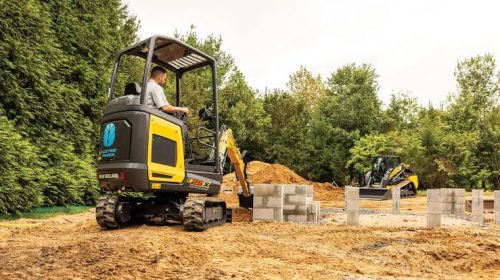
Equipment fleet management involves balancing machine capability, utilisation, availability, operating costs, and the needs of different projects. Contractors may operate machinery of several sizes and types to support construction, landscaping, maintenance, and excavation activities. When considering an electric mini excavator, businesses should determine how it fits into their existing fleet rather than evaluate the purchase in isolation.
Companies looking for an electric mini excavator for sale should assess their recurring project requirements, fleet gaps, operating schedules, transport arrangements, charging infrastructure, and ownership costs. Electric mini excavators may be useful for selected applications, but their value depends on whether they complement existing equipment and provide suitable capabilities for the company’s work. A structured fleet evaluation can help determine where the machine fits and how it should be managed.
Identify Gaps in the Existing Fleet
The first step is to review the equipment already available. Management should identify the types of excavation tasks performed, the machines currently used, and any recurring problems involving access, transport, utilisation, or equipment availability.
A fleet review may reveal that certain projects require a smaller machine or that existing equipment is unnecessarily large for particular tasks.
Contractors should examine project records, operating hours, equipment assignments, and recurring job requirements. This information can help establish whether an electric mini excavator would address a genuine operational need.
Evaluate Expected Utilisation
Utilisation influences the value of equipment ownership. A machine that is used frequently across suitable projects may provide greater practical value than one purchased for occasional activities.
Management should estimate the number of working days, operating hours, and types of projects the excavator is expected to support.
Utilisation should be based on realistic expectations. Businesses should consider seasonal demand, project availability, transport requirements, charging arrangements, and operator scheduling.
Match the Machine to Fleet Applications
An electric mini excavator may be assigned to landscaping, trenching, selected construction preparation, maintenance, or restricted-access work.
The machine’s specifications should be compared with the requirements of these applications. Buyers should evaluate operating weight, dimensions, digging depth, reach, bucket capacity, battery performance, and attachment compatibility.
A machine intended to serve several fleet applications should have sufficient capability for those tasks while remaining appropriate for its operating environment. Contractors should not expect one compact excavator to replace every other machine.
Consider Fleet Transport Requirements
Adding equipment can affect transport arrangements. Contractors should evaluate the machine’s operating weight, transport dimensions, loading arrangements, and whether existing vehicles and trailers are suitable.
Transport planning should include delivery and collection routes, loading procedures, and any restrictions affecting the machine or transport vehicle.
If the excavator is used across several projects, management should consider how transport will be coordinated with other equipment assignments. Efficient scheduling can help reduce unnecessary movement and delays.
Plan Fleet Charging Infrastructure
Electric equipment introduces charging requirements that may affect fleet management. Contractors should determine where charging will take place, what electrical infrastructure is available, and whether the charging arrangement supports expected utilisation.
If several electric machines are introduced, charging resources may need to be coordinated. Management should consider the combined requirements of the fleet and establish procedures for charging, monitoring, and equipment readiness.
Charging infrastructure should be planned according to manufacturer requirements and appropriate safety procedures.
Evaluate Operator Allocation and Training
Fleet management involves assigning equipment to suitable operators. Contractors should consider who will use the electric mini excavator, whether training is required, and how operator availability affects project schedules.
Training should cover controls, operating limitations, safety features, battery indicators, charging procedures, inspections, and maintenance responsibilities.
Management may also benefit from collecting operator feedback after the equipment has been used on different projects. These observations can help assess the machine’s suitability and identify areas where procedures need improvement.
Review Maintenance and Service Support
The fleet maintenance plan should include the electric excavator’s service requirements. Contractors should review maintenance schedules, battery care, parts availability, warranty terms, and technical support.
Equipment records should track operating hours, inspections, repairs, charging-related information, and maintenance activities.
The company should also consider how service arrangements affect fleet availability. If equipment is needed for scheduled projects, support should be evaluated in relation to the business’s operational requirements.
Calculate the Financial Impact
The purchase should be evaluated using total ownership costs, including acquisition, transport, charging infrastructure, maintenance, repairs, financing, insurance, training, attachments, and other relevant expenses.
Management should compare the costs with expected utilisation and the work the machine will support. Fleet decisions should also consider whether the purchase creates duplication or improves the company’s ability to undertake suitable projects.
Conclusion
Selecting an electric mini excavator for an equipment fleet requires a review of fleet gaps, utilisation, applications, transport, charging infrastructure, operator allocation, maintenance, and costs. Contractors who evaluate the machine as part of their wider equipment strategy can determine whether it provides a useful addition and how it should be assigned, maintained, and scheduled across their projects.