

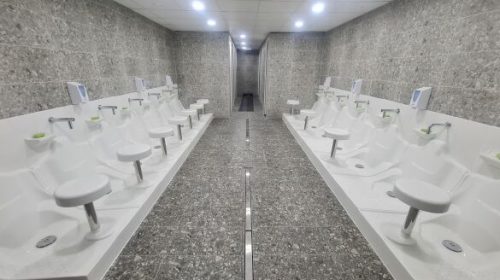
Water sustainability has become a central concern in modern architectural planning, especially in public and religious facilities where daily usage is high. Mosques, Islamic centers, airports, and educational institutions all require efficient ablution areas that balance religious requirements with environmental responsibility. As global water scarcity concerns grow, the demand for innovative and water-efficient infrastructure continues to rise.
In this context, the design of ablution facilities is evolving rapidly, with greater emphasis on conservation technologies and smart usage systems. A modern Wudu Wash Basin plays a key role in this transformation by enabling controlled water flow, reducing waste, and supporting sustainable facility management practices in high-traffic prayer environments.
Table of Contents
ToggleThe Importance of Water Efficiency in Ablution Areas
Ablution is performed multiple times a day by millions of worshippers around the world, making it one of the most frequent water usage activities in Islamic infrastructure. Without efficient systems, this can lead to significant water wastage.
Sustainable planning in wudu areas focuses on:
- Reducing unnecessary water flow during washing
- Preventing continuous running taps
- Encouraging controlled usage behavior
- Improving drainage and reuse possibilities
These improvements not only reduce environmental impact but also significantly lower operational costs for large facilities.
Smart Design Strategies for Sustainable Wudu Systems
Modern architectural approaches prioritize efficiency and sustainability from the earliest design stages. Ablution areas are now being engineered with advanced layouts that support both functionality and conservation.
Key design strategies include:
- Ergonomic station spacing to minimize splash waste
- Sloped surfaces that guide water efficiently into drainage systems
- Segregated wet zones to reduce contamination
- Durable, non-porous materials that improve hygiene and reduce cleaning water use
These design choices ensure that water is used only where necessary, without compromising user comfort or religious requirements.
Technology Integration in Modern Ablution Systems
Technological advancements have significantly improved water management in ablution facilities. Many modern systems now incorporate automated and semi-automated features to control consumption.
Common innovations include:
- Sensor-activated taps that reduce manual flow control issues
- Timed water dispensing systems for regulated usage
- Low-flow aerators that maintain pressure while reducing volume
- Smart monitoring systems to track water consumption patterns
These technologies are increasingly being adopted in large mosques and public prayer facilities where efficiency is a top priority.
Environmental and Economic Benefits
Sustainable water management is not only an environmental necessity but also an economic advantage for facility operators. Large religious and public buildings often face high utility costs, making efficiency improvements highly valuable.
Key benefits include:
- Lower monthly water bills
- Reduced strain on municipal water systems
- Extended lifespan of plumbing infrastructure
- Compliance with green building standards
By investing in efficient ablution systems, institutions can achieve long-term operational savings while supporting environmental responsibility goals.
Role of Export Markets in Sustainable Infrastructure Growth
The global demand for sustainable mosque infrastructure is creating strong opportunities for manufacturers and exporters. Countries in the Middle East, Southeast Asia, and Africa are increasingly prioritizing eco-friendly building solutions in new development projects.
For exporters, this trend opens opportunities in:
- Large-scale mosque construction projects
- Airport and transit prayer facilities
- Islamic universities and educational institutions
- Government-funded sustainability initiatives
Highlighting water efficiency and environmental compliance in product marketing can significantly improve competitiveness in international tenders and procurement processes.
Digital Marketing and B2B Growth Opportunities
To succeed in global markets, manufacturers must adopt strong digital marketing strategies that highlight sustainability features and technical advantages. Buyers are increasingly searching online for eco-friendly and efficient sanitary solutions.
Effective strategies include:
- SEO-focused content targeting sustainability and mosque infrastructure keywords
- Detailed product pages with technical specifications
- B2B advertising on global construction and export platforms
- Case studies demonstrating real-world water savings
These strategies help manufacturers attract architects, contractors, and procurement specialists who prioritize efficiency and environmental compliance.
Conclusion
Sustainable water management in ablution systems is becoming a defining factor in modern Islamic infrastructure design. As global awareness of environmental conservation increases, the need for efficient and well-engineered washing facilities continues to grow. A modern Wudu Wash Basin is no longer just a functional fixture but an essential component of sustainable building practices. For manufacturers and exporters, this evolving demand presents significant opportunities to expand into international markets through innovation, quality, and strategic digital marketing.


